Online 3 Minute Thesis Contest at Athabasca

I’m intrigued by this “speed dating” approach for disseminating and promoting thesis research. A thesis is a LOT of work, and results are usually buried in 150+ page tomes – thus the need for new scholars to be able to present their work succinctly and efficiently.  The 3 minute thesis (originally developed at University of Queensland Australia) seemed like an ideal format for developing communications skills and confidence and be fun for both contestants and the audience.  Other 3 minute thesis contests have been held F2F, however, Athabasca graduate students are located around the globe (literally) and so we needed to use a distributed platform to host the event. Of course, the organization of the event also had to be easy and inexpensive so as to fit into my busy schedule and budget as well.

In this post I detail how this, to my knowledge, world’s first online 3 minute thesis contest worked, with a hope that it inspires similar contests.Read More

How much time does it take to teach online?

How much time does it take to teach online?

I’ve long been fascinated by studies on time factors in online learning. The issues of teacher time are especially relevant given the high cost of teachers, the threat to the profession, MOOCs offering much less teacher-intensive education opportunities and my own online equivalency theory.

This study

Mandernach, B., Hudson, S., & Wise, S. (2013). Where has the time gone? Faculty activities and time commitments in the online classroom. Journal of Educators Online, 10(2).  http://www.thejeo.com/Archives/Volume10Number2/MandernachHudsonWise.pdf.

This study was done with 80 FULL TIME online teachers, teaching 4 online courses during the same semester. This is a much less common administrative format for online teaching in that most online teaching is done either by part time adjuncts or by teachers teaching both online and on campus.

Teaching in any context varies a great deal based on personal teaching style, use of synchronous tools, discipline, level and motivation of learners, support and funding for teachers and a host of other contextual factors. Nonetheless aggregate data is very interesting and helps paint the reality as well as vanquish some myths about online teaching. As expected the data confirmed that teachers did spend slightly more time online than literature reports for oncampus. (Averaging 44 hours/week for the 4 courses). But perhaps of greatest interest is the tasks that made up these 44 hours.

Teacher tasks onlineRead More

Two Days, three Museums, two Cathedrals and 576 Kms on the Costa Del Azaharhone

This is my first blog post from my 2 month position as a visiting professor at the open University of Catalonia (UOC). UOC is a 100% distance University (like Athabasca U.) but founded not as a correspondence university, but as an online university in 1997.  There is a large open university (UNAD) in Madrid but UOC was founded with a mission to teach in Catalonian (think Quebec) – though to reach the Latin American market they teach in Spanish and of course, some graduate programs in the lingua franca – English.

My tasks at the University are to meet with grad students about their thesis, meet with various faculty about “hot” research topics of the day -notably MOOCs and do presentations at 4 conferences.  UOC has an E-Learn Research Centre which undertakes and champions elearning research, teaches a Masters and a PhD program in E-learning and is responsible for faculty development at the University. I chair the E-learn Centre’s International Advisory Committee which meets annually (next week) to provide assessment and other collegial advice to the Centre and to the University.  The rest of the time, I chat informally with staff – who are very helpful whenever Sue and I get into problems and thanks to the Internet, keep up my duties at Athabasca – time shifted by 8 hours.

Susan has had six or so sessions by telephone with her counseling clients, but getting to SKYPE video conferencing has been a problem to date from home. Speaking of which, the University rented us a great apartment (our first experience of high rise living) on the 20th floor.  As I write I get a terrific view of the boats anchored off the Barcelona harbour, the old Gothic quarter, the mind blowing Gaudi Sagrada Familie and the Tibidabo mountain that broods over the City. Hopefully tomorrow, we get Internet at home – and I can post this blog!

The title of this blog comes from our most recent trip to Valencia. We have twice rented cars and driven first North – Costa Blanca and last weekend south to Valencia. We began last weekend’s adventure, by me forgetting we had the car for Friday evening and arriving on Saturday morning  to pick up the car, but they were all out of GPS systems. But we had the faithful Iphone (more later) so we ventured forth with and the car rental map and my faithful navigator Sue (when she remembers to put on her reading glasses on) guiding the adventure.Read More

A Publishing Primer for Education Grad students

Ask any academic, and they will get into a long discourse about the value of publishing scholarly work, the politics of doing it, the challenges and the outlets.  Although you haven’t asked, I’d like to share my own ideas with particular relevance to publishing work related to distance education.

By way of background, I’ve been in the publish or perish business (as a full time academic) for the past 20 years. During that time I’ve published (solely or in collaboration) over 60 articles and have had my share of rejections as well (ouch!). I also have been the editor of IRRODL for the past 10 years, and so have been involved in the review and production of over 500 articles and many more rejections!

Why Publish?  If tenure or a promotion is at stake, the answer to this question is obvious. If not, publishing allows you the opportunity to share your work on an international scale. You’ve worked long and hard on a project and not only does your work likely warrant celebration and dissemination, the publication begins building your global academic career and increases your social capital, that you can cash in for a whole variety of rewards.  Publication also insures that your work preservers. It is a great treat when you get old (like myself) to revisit some of your earlier work – without having to find a machine that reads 5 ¼ floppy disks! Finally,  a quality review process, will show you how to improve the article and thus directly lead to increased capacity to express yourself in this format. A video addition to this post for an OER course.

Read More

MOOCs as community??

MOOCs as community??

Here at Athabasca University we’ve finally begun serious talk about our approach to MOOCs.

We are working through two models, trying to decipher the pros and cons of each or both. These are:

  1. Run one of more of our own MOOCs, based in whole or part on our current online courses. In order to be a MOOC, the courses should be free and that creates some challenges. Obviously a revenue or substantial service model needs to be developed for sustainability.
  2. Cherry-pick a few MOOCs, offered by others, and after asserting that they are equivalent to an AU course allow and promote students to challenge the course for AU Credit.

Both models offer challenges. Giving credit for work outside our traditional online courses is a scary option as it may lay us open to critique for being not a rigorous school and giving our very transferable credits away too easily.  However, rare  amongst most universities, Athabasca already has an approved Challenge Exam Policy for many of our undergrad courses. This means that may students register and schedule an invigilated exam that covers the course materials. They can buy textbooks if they choose. They get no library, tutor, counselling or other academic support. However,  the number of students going this route has dropped substantially – to less than 1,000 year when we upped the fee to $354.   Many are worried that if we reduced the fee to the $30-60 range that Coursera charges for its “signature track” too many of our regular students would opt for the cheaper option which is about 40% or so less than our regular tuition.  I think the market value for challenge accreditation should be closer to $125 which should easily cover our admin costs. This MOOC for credit option is cheaper, easier and initially of lower service value but it may appeal to a whole new class of learners – Sound Familiar?? These are the characteristics of a classic disruptive technology.  Very scary indeed!!

The second debate  at Athabasca revolves around a MOOC platform. There are a number of options available including recent announcements of the availability as open source of the platform used by EdX and Stanford. But here at Athabasca, we are tending to look at ways to re-purpose our existing platforms. Moodle is an obvious choice and in addition we have quite a substantive elgg social networking platform that could be used. New instances of either of these platforms could work.  I think the choice depends on the nature of the MOOC. If the MOOC is of the so called xMooc variety with a tight predefined curriculum and learning outcomes, lots of teach centric videos, quizzes and threaded discussions, then likely MOODLE is best. However for cMOOCs in which students are encouraged to bring and develop their own personalities, web presences and artifacts using an emergent or connectivist pedagogical design, the ELGG based platform with its capacity for student created blogs, bookmarks, tweets, user generated videos, etc. may be best.

I was interested to read the article with Simon Nelson the director of the Uk’s collaborative MOOC consortria FutureLearn  led by the Open University.
Nelson sees FutureLearn as much more than xMOOC delivery platform, and hopes their platform may develop like a Facebook social network for lifelong learning.  We are trying to do this at Athabasca with our Athabasca Landing project – a boutique network, open to all members of our wider Athabasca community. But we are finding that it is hard to win a critical mass of users and to get buy from our administrative services. Academics and students have many options beyond the mega sites of Facebook and LinkedIn and as always, have limited amounts of time and energy. Perhaps with more MOOCs activity would increase, but then we might have to open our “walled garden, with windows” to any who enrolled in a MOOC – regardless of their intent to learn and contribute.

Anyone who has solved all of these issues, please contact us immediately! 🙂


Business Models for Online Education

The latest issue of the Online Journal of Distance Education Research has an article that tries to define a “3rd” university model.

Rubin, B. (2013). University Business Models and Online Practices: A Third Way. Online Journal of Distance Education Administration, 16(1).  http://www.westga.edu/~distance/ojdla/spring161/rubin.html.

This 3rd model for online university is not quite like the traditional campus based university that runs online programs either through faculties or an extension department, with a whole lot of faculty control and craft development.  Nor is like the non-researching for -profit university with an industrial model using adjuncts to teach and professionals to develop consistent and arguably high quality education.  Rather, this third model really has a full time faculty and it tries to empower the faculty, but course design and testing is a shared responsibility between “experts” and the faculty. In the article (see figure below) you’ll see two really contentious issues:

  • allowing faculty to specialize (and be rewarded) in one of the three roles in the academy – discovery research, teaching and destination, or service. Most faculty are vehemently oppsed to models that differentiate their jobs and many see it as a means only to increase either workload or accountability driven change.
  • increasing sharing of control with professions such as learning designers, editors, media experts

Read More

Buddhism and Thailand

Buddhism and Thailand

This month, I enrolled in a 4 week course on Buddhism led by a member of our Unitarian Congregation here in Edmonton. I’ve always been interested in Eastern religions and the opportunity of this course coupled with my first opportunity to visit South East Asia, proved to be a great learning opportunity.

On the first evening of the course we were discussing basic Buddhist concepts including, of course, the Four Noble Truths, the first of which is that all life is suffering. These kind of all inclusive statements always make me suspicious -especially when they don’t align with own experience. In a similar way that I reject the Christian idea that I am an inevitable sinner, (though I do make mistakes) I have trouble conceiving of my life as continuous suffering.  With the caveat that I realize that I am a privileged male, with high status job, in a rich country, I mentioned this confusion  to the class and the course instructor. She wondered if my moments of anger weren’t suffering (but I don’t get  angry that often either) and I later reflected that certainly the degeneration of the body through aging causes suffering as most recently experienced with death of my Mother a few months ago. Nonetheless, I wasn’t sure about the veracity of this first Noble Truth.

The evening after the second class of the seminar, I headed off to Bangkok to deliver the keynote at the Asian Regional Association for Open Courseware and Open Education Conference. The trip went well and I was met at the airport by my ever attentive Thai hosts, and driven to a nice hotel in downtown Bangkok. The next few days were spent touring the quite amazing sites, palaces, historic and modern temples in this capital city and attending the conference. It is a wonderful and privileged way to see the sites, with a local faculty member from the Thai Cyber University Project (my hosts for the whole journey) to guide and translate and a private driver


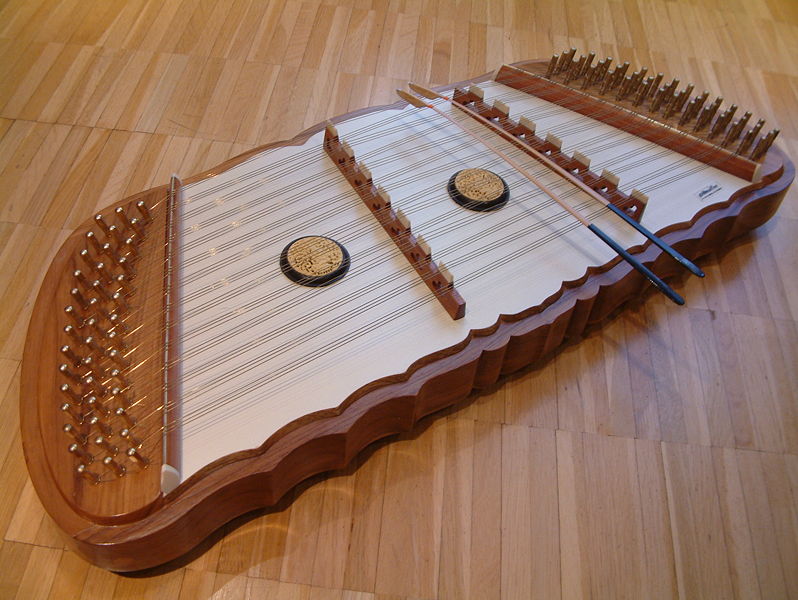
and the company of colleagues from Japan and the US. My talk went pretty well and the food, conversation and “networking” was great.   My hosts heard that I was interested in hammered dulcimer music and found a shop that sold me traditional Thai Khim, for a very reasonable price. Now, if I can only learn to tune and play it!!

Four days after my arrival in Thailand, we took a 70 minute flight to  Sakon Nahkon, capital of a state in North Eastern Thailand not far from the Laos border. This second conference was for an annual meeting of the computer service directors from all Thai Universities, held at Kasetsart University an Agricultural University. We attended the opening ceremony, wore our VIP badges, but the proceedings were in Thai, so we didn’t add much and spent the afternoon touring the rice, cotton and forestry test plots at the University.

That is when suffering struck!  A small discomfort in my stomach soon turned into a now becoming too familiar acute gastritis attack. The next 48 hours were spent retching and moaning about the suffering in my miserable life.  My hosts were very understanding and I was visited by a pharmacist and a physician and was relived from having to give my second lecture of the trip.

The Lord Buddha, had indeed taught me a lesson about suffering!

I recovered, though still a bit sore, for a two final days of touring, notably to the beautiful temple on the banks of the historic Mekong River. On our final day we visited  Ban Chiang World Heritage site, where evidence of brass and iron tool production from as early as 5500 years ago has been discovered – causing historians to rethink the Euro/African/Chinese centric view of early bronze age tool development.

We visited probably over 10 temples, all of which were very ancient, in very active use, or both. Orange robed monks were much in evidence in both towns and in the rural areas. Buddhism is a part of the day to day to lives of nearly everyone, as evidenced by the shrines in the yards of most houses. The monks, whose daily food is acquired each morning from the people and must be consumed by noon, treat this ‘begging’ as a gift to the people that allows them to earn good karma.

As expected the numbers of poor people, crowded cities, traffic jams and heat (for Canadian in January) were a bit much, but what stands out for me about this trip is my lesson on suffering, and the incredible kindness, constant smile and palms together greetings and gifts of the incredibly generous Thai people.

MOOC pedagogy and accreditation

Most of the cacophony of comments and posts about MOOCs and their disruptive potential has focused on their free cost to students, high enrolments, superstar teachers and high prestige Universities.

Relatively little has been published, much less researched, about MOOC pedagogy. A thoughtful article by C. Osvaldo Rodriguez in EURODL mapped the evolution of the so called cMOOCs to connectivist generation of pedagogy that Jon Dron and I wrote about in IRRODL.  Conversely, given the focus on measurable outcomes and dissemination of content, it isn’t too much a leap to suggest (as Rodriguez’s does) that most of the big name xMOOCs are following the mass education model pioneered by open and distance education institution which we referred to as first generation, cognitive behaviourist pedagogy.

But putting labels on delivery models, doesn’t really lead us forward, unless we are also brave enough to venture into issues of effectiveness. However ontological differences between the models make comparisons based on effectiveness challenging. It is easy for traditional and constructivist pedagogues to jump to arguments about educational effectiveness that have at their root, notions of intense interaction with teachers or at least with peers. Of course with 100,000 students one has to change normal definitions of “intense interaction” to even begin to argue about effectiveness from a social-constructivist perspective.  Thus, most social constructivists focus on the opportunities for peer interaction and point to the emergence of meet-ups and online study groups as spontaneous evidence of MOOC effectiveness. I see these as a capacity, but in my experience of adding or even encouraging optional opportunities for peer-to-peer interaction, it doesn’t lead to much take-up  (beyond those exchanging telephone numbers with potential romantic partners).  However, with 100,000 students even a take up of a few percent is not insignificant and may be life-changing for some learners.Read More

Open Access Week Update

This year, Athabasca University will again be celebrating Open Access Week, with a series of free and ‘open’ noon hour (MDT) web casts.

The theme for the 2012 Open Access Week is “Set the Default to Open Access”.  Athabasca University is proud to participate in its fourth international Open Access Week, between October 22-28, 2012 to broaden awareness and understanding of open access issues.

This event is sponsored by the UNESCO/Commonwealth of Learning Chair in Open Educational Resources (OER), Dr. Rory McGreal and Athabasca University/ The format consists of a series of noon hour webcasts exploring major issues and opportunities of Open Access and Open Educational Resources. Each session will feature an internationally known promoter and developer of open educational resources, research, or ideas.

For more information, visit http://openaccess.athabascau.ca or contact Tony Tin at tonyt@athabascau.ca.

  • Monday, October 22nd OER and Mobile Learning Dr. Rory McGreal The OER university: A sustainable model for more affordable education futures Dr. Wayne Mackintosh
  • Tuesday, October 23rd Open Access and Public Policy Dr. Frits Pannekoek
  • Wednesday, October 24th “Open and Closed” Getting the mix right. Who gets to Decide?? Dr. Jon Dron Dr. Terry Anderson Dr. George Siemens
  • Thursday, October 25th Integrating openness in course design Dr. Cindy Ives  and Much Open Online Content (mooc) Mr. Steve Schafer
  • Friday, October 26th Sleeping with the Elephant – Leveraging AU’s Position through Open Courseware Dr. Martin Connors Contribution of AU’s e-Lab initiative to Open Access and OER Development Dr. Evelyn Ellerman Athabasca River Basin Research Institute Repository: Enhancing open access, education and research Dr. Lisa Carter

I hope to ‘see’ many of you there.