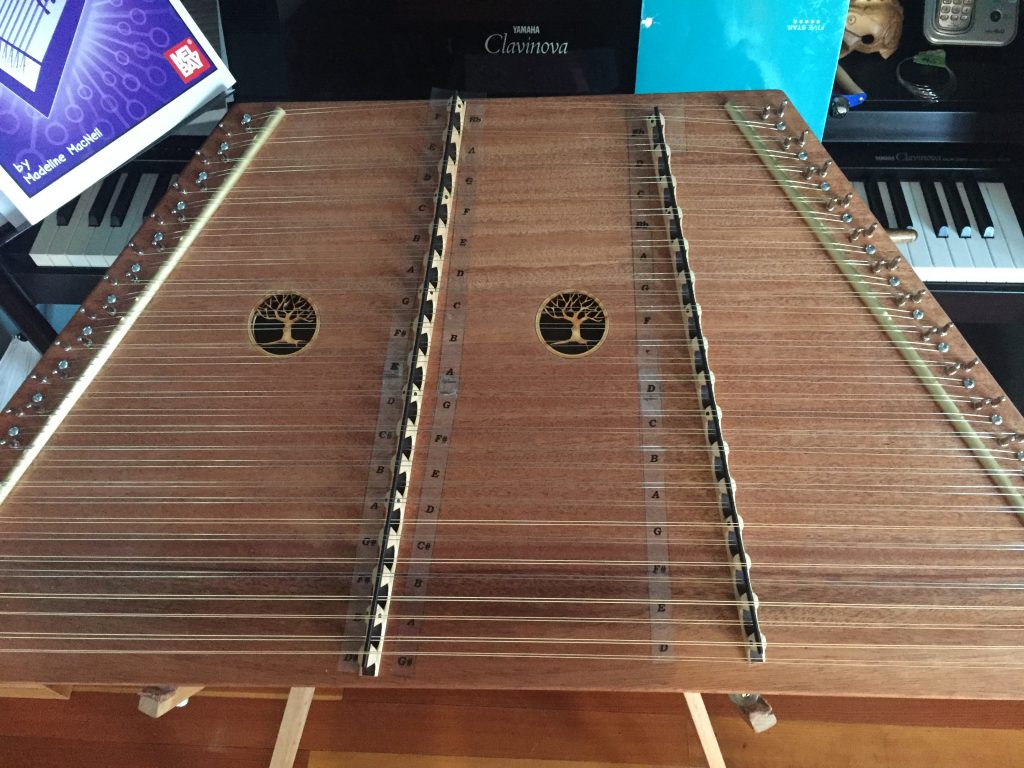
Finished building my 2nd hammer dulcimer

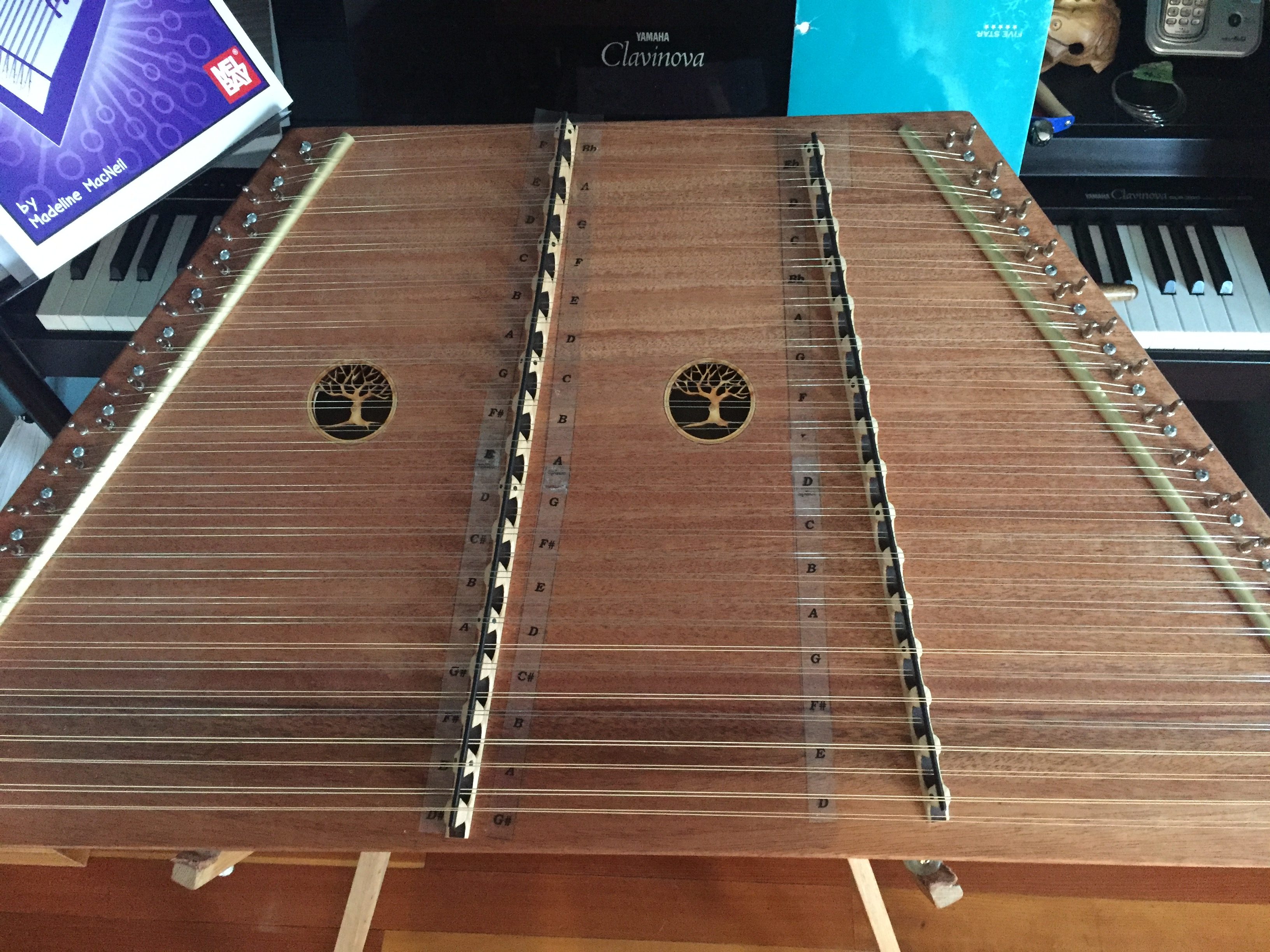
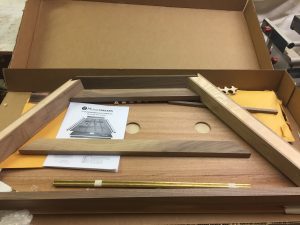
Although I’m still quite liking the current dulcimer I am playing that I bought off Ebay, I was curious how much time and effort is required to build one from a kit.  As a previous post notes, I crafted a 16/15 dulcimer from ‘scratch’ a couple of years ago, but found that although it sounds LOUD, it is very heavy and has some string spacing issues.  I guess it is more of a parlour dulcimer but I want one that I can take to gatherings and jams.  I also thought by building a kit, I would be able to absorb the skills from another craftsperson, save some money and have some fun with a new project.

I ordered two kits from Music Makers from Minessota:

The kits arrived as expected with no damage. On initial exploration I was impressed by three things:

  1. The instruction booklet was very detailed and when I followed it EXACTLY I didn’t really have any problems – when I did the usual man thing and didn’t read the instructions carefully, I had to redo a couple of small details – but no major mistakes.
  2. There was no knots or imperfections in the wood- something I had to deal with when making the last one from rough lumber.
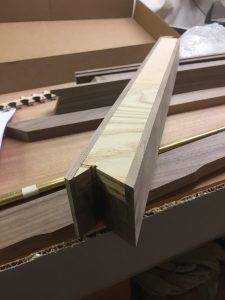
  3. The side pin blocks, which has to withstand the tension of all the strings, are best made out of laminated hard maple – and they were in the kit. But they were slotted into the walnut sides producing a nice dark effect and still highest quality. It took me some time to figure out how I could replicate the joinery if I make another with a similar design.


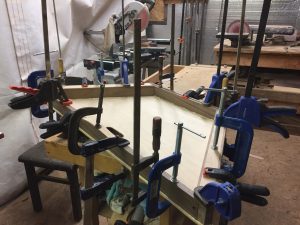
The glue up went pretty well as expected – but as always you never have enough clamps (as evidenced by the hodge podge connection of clamps  I used). Both the back (3/16 hardwood plywood) and the top (solid mahogany) were oversized so I had to either sand or

use a trim bit on the router to cut them to exact size after gluing. I likely should have taken the router out of the router table (given the size of the glued up dulcimer) and perhaps scored the cut, but I managed to trim it down, with only one small run out. This run out into the top caused me to have to round the edge more than I had originally intended but it looks fine now.

The sanding and finishing went well. My 30 year old finishing sander finally died (29 years after it sanded well). Giving me a good excuse to purchase a new oscillating hand sander ($100). I didn’t stain it – as the mahogany and walnut look fine and I put on about 6 coats of rub-on polyethylene.

The kit didn’t come with the usual hitch pins, but with stainless steel screws to hold the strings at the end of the strings without the tuning pin.  This made it easier to hook strings on and drill receiving holes but doesn’t look as traditional as most hammer dulcimers. However, I didn’t want to wait for an order of hitch pins and so used the screws.

The stringing and tuning went as expected, but didn’t take as long as my last one as a single string was used, wrapped from the tuning peg to the screw hitch pin and then back to a second tuning pin to create a  double string for each of the 33 courses.  As expected the strings stretched after installation and the treble bridge had to be shifted back and forth to get the right position to give it tuned on both sides, but it worked out!

And most importantly it sounds pretty good!

Now my last problem is finding out what to do with my 5th hammer dulcimer!!  Anyone want to buy a brand new 16/17 dulcimer??


My Secular talk for our local Unitarian Congregation

I’ve been reading quite a bit lately about Humanism and participating in our FreeThinker Book Club, and especially its role in the Unitarian movement. Thus, I took the opportunity this year to do a talk and focussed on the 10th anniversary of religious Humanism. I’ve come to learn (thanks to John Dewey) that religious humanism is not an oxymoron.

Rather, Dewey uses religion as an adjective to describe the sense of awe, wonder, gratitude and service that the universe and its creatures inspire. It is not the same as the word religion used as a noun to describe a social organization designed to propagate, support and preserve the ideas of a certain, often privileged, group.

I had lots of time to prepare for this topic , but not enough time to make it shorter. Thus, I was shocked to find in a trial read-through the day before show time, that it took 20 minutes just to get through 7 of the 17 pages of text to Atheists, Humanists and FreeThinkers in our Unitarian Closets.  I also realized that I was terrible at both reading and maintaining eye contact – at least without a teleprompter as used by the politicians.  Thus, I retreated to familiar territory from the keynote circuit and created the attached powerpoint slides. 

The talk was generally well received and got the occasional laugh and an unusual applause at the end.  Thus, I hope it serves to open a place for religious thought- especially of the Humanist type, in each of you this Solstice Season!


An attempt at a North Country Fair History Wiki

Hi folks

This coming year marks the 40th North Country Fair – the Annual Solstice Celebration held in Northern Alberta.  A very long time ago, I had the idea of turning our annual community celebration of the Solstice into a more public and BETTER celebration. The vibrant community of “back-to-the landers” in the Lesser Slave Community  managed to create a public celebration, pay the bills (consistently), introduce hundreds of musicians to the crowd and vice-versa, so as to create a Sunsational Annual Solstice Event.

The Fair now owns its own huge track of land on the Driftpile River Valley, south of Lesser Slave Lake. Each solstice over 5.000?? people converge in the Driftpile River valley  to make music, celebrate friends and family and the gift of life. The site is also leased by other community and music groups.

For many the North Country Fair has been an extraordinary experience – as they have met (or born) life changing events. People have been born, married and even died at the Fair!

The spirit of the Fair has been described (both with and without mental enhancements) as mind blowing, wet, Wow!, frustrating, very groovy and many more.

We want to capture and share these experiences. For ourselves and others.

The NCFwiki invites all of those who have interest and who have experienced the Fair to share their stories, photos and memories.  The site uses a popular wiki, content management system (TikiWiki) to organize, search and retrieve Fair stories, programs, photos and more.

The way a wiki works (with WikiPedia being the single best example) is that some of those who have experienced the Fair, take it upon themselves to add to the Fair Wiki. Some (usually less than 2%) become active editors  – editing, nudging, suggesting and in other ways helping to curate the archive.

I have set up a preliminary shell for the Wiki. I’ve also added a view stories, scanned a few programs and posters, linked a few newspaper articles and photos and proved – at least to myself, that this could work. But it needs loving labour!!

We know have, what anyone who has lived in Northern Alberta knows well, a ‘cold start’ problem. Did I ever tell you the story of warning a frozen truck on Hippy Hill when the propane Tiger Torch ignited the engine block??). I digress.

In order to be useful a social network site (like a wiki) has to be used.

To be used it has to be useful.

So, I have created a shell (much like Wikipedia did years ago) but I know from other  experiences, that it is much easier to create a wiki shell than to populate it and for it to achieve critical mass.  The TIKIWiki system has many other community features that could be activated to acknowledge and honour contributors, as well as crowd tools like “likes”.  These could be added.

I hope you will take a few moments to check out the site at virtualcancuk.ca/NCFwiki . The site needs design expertise (I have very limited skills in this area)  but mostly it needs people who value the Fair enough to contribute.

The current site of the wiki is on my own self-funded blog. The plan is to transfer the ownership of the wiki (if successful) to the official LSLNCCA community association site.

How to Contribute:

Wikipedia works by self-selected individuals registering (and being authorized by me) as “editors” and then they have the permissions necessary to both add their own and edit the contributions of others.

Thus, the final work becomes a community effort. Of course, this gives rise to arguments and discussions of quality, authenticity, veracity, organization schemes and much more. And these have NOT all been thought through, but the important thing now is to get a critical mass of contributions, such that Fair Folks find it of value.

Some potential contributors may not wish to bother with learning the technical details of creating and managing contributions. This is understandable, but I do encourage  Fair friends to stretch  their personal net skills by learning to contribute to a public archive, such as this WIKI. You may well love the experience of sharing.  However, if you wish you may also send emails with attached content to myself, and I or other volunteer editors will  figure out how to add them.

A wiki usually contains both unique content and links to external contact.  So for example, Eric Marks has created many photos of the Fair and he has uploaded these to Flickr . Eric or others could add these directly to the wiki manually, thus ensuring they last if Flickr were to close down, but that is a significant task, so for now they are just linked (see an example here).

Please email me if you have questions or wish to help with this exciting project.

Terry


Detailed account and Lessons from a Seniors´ Tour de Mt Blanc

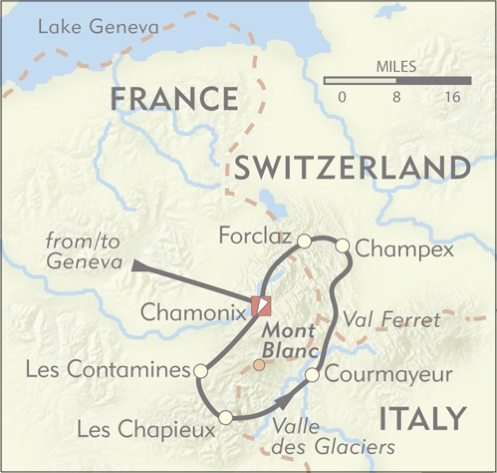
During September 2017, my brothers Dennis and Craig, and I (-all over 65 years old) spent 10 days hiking on the Tour de Mt. Blanc (TMB).  The Mount Blanc Massif is a series of adjoining peaks, one off which is the highest in the Alps. The massive valleys and glaciers flow down – in the NE to Switzerland, to the south into Italy and North and west into France.  Europeans have been hiking on and around the massive since the 1700´s and today the TMB is the most popular hike in Europe -not counting the Camino de Santiago, which technically is not a hike but a pilgrimage.
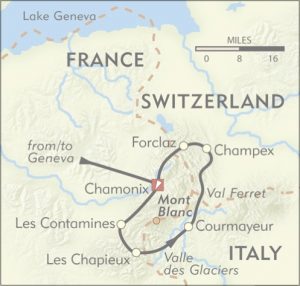
Tour De Mt Blanc Map Credit BestHike.com

Sprinkled along the TMB are a series of Refuge´s which offer a variety of mostly dorm-like accomodations, usually wonderful 3-4 course meals and a breakfast for around 50 Euros /night ($70 Canadian). The Tour also passes through a number of small towns where much more sophisticated (and more costly accommodation) is available. Like most of the hikers we travelled with our copies Kev Reynolds text Tour de Mt Blanc:Complete two way Trecking Guide. This guide book describes routes between various refuges, provides optional side trips, gives both topographic and elevation maps for each of the 10 suggested daily legs of the Tour.
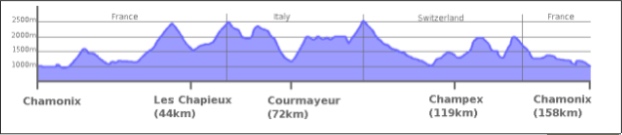
For the month proceeding this adventure I had been practicing hiking (mostly from our home in Edmonton in the North Saskatchewan river valley) with my 20 pound pack and I became reasonably confident that I could manage the 16-18 km daily treks.  However, I spent only 1 day hiking in the Rockies near Jasper, and decided to forgo a hike listed as the most challenging day hike in Jasper National Park – challenging in that it had a height gain of 700 metres – big mistake that! As you can see elevations gains (and losses) were up to 1500 Metres/day.

Brothers on the Trail

To make a long story short, we had a great trip, however we didn´t succeed in doing the whole circular trek – leaving a couple of legs for when and if, I return with my wife Susan! My brother Dennis (eldest, purser and chief organizer) has a more detailed account of each leg of the trek which I insert below.


In this post I provide a list of personal recommendations.

  1. Pack Right Of course, beginning hikers always complain (usually with justification) that they brought too much in the pack. I was also doing a talk at the Open University of Catalonia and a week on the beaches of Majorca and Ibiza on the way back, so had to bring some extra clothes. As it turns out I had a few too many short sleeved shirts and too many socks as we were able to wash clothes in a few hotels we stayed at.  Bringing a Kindle (and no paper books) and leaving my computer behind for the first time in decades were both good packing decisions.
  2. Go at the right season The timing of the trip is crucial. The trail doesn´t really open until June, as snow plugs higher passes. July and August can be busy, making reservations more complicated at Refuges. September was generally a good time, except that it can get chilly and more layers are required. Secondly and especially for seniors the TMB offers a number of ski lifts which can be very useful in reducing the elevation gains. However, these were almost all closed between the summer and winter seasons beginning around the first week in September.
  3. Keep Dry We all carried rain gear, but we curtailed one leg to a very short day when we encountered hikers from the other direction reporting snow, sleet and rain driving horizontally and making visibility and even finding the trail challenging, up ahead. We heard the following day that a hiker from Indonesia on this leg had to be rescued and flown out by helicopter suffering from extreme hypothermia, with a not good prognosis for recovery!  Thus, travelling at this time requires attention to the weather and willingness to skip very high sections, or wait for better weather.
  4. Follow the Herd?? Given that the trail is circular one can start at any place desired. We choose to begin at  Champex de Lac in Switzerland – largely because we thought it might be less crowded than the usual start from Chamonix in France. However this necessitated a 4 hour trip on 4 trains and a bus from Geneva Airport (85 Euro cost). A faster and cheaper option is the 75 minute shuttle bus to Chamonix for 20 Euros. We also choose to walk clockwise, rather than the more common anti-clockwise tour -again mostly to avoid crowds, but it didn´t seem to make much difference.
  5. Take Care of your feet. My biggest fear was that I would be hobbling after my brothers on blistered feet. Through the wisdom of others I found that wrapping clapping toes with tape or ‘mole skin’ helped but what really worked for me was investing in two pairs of toe socks. These enveloped each toe in cosy covering and totally solved the abrasion problems for me. None of this would have been discovered without my “training hikes” before the trip.
  6. Use hiking poles.  Poles serve three important functions.  They are great at restoring balance when occasionally just a pound or two of thrust can avert a slip, a slide or a  tumble. I also used them uphill to provide a bit of thrust, which may feel like as useful as just pushing the earth away, but it seemed to get me going up hill and provided a workout for my arms as well as my often tired legs. I also used them coming down hill when my knees started feeling ‘wobbly’ to cushion the shock of stepping down in uneven terrain.  Highly recommended.
  7. Don’t camp.  We were surprised to see a significant number of hikers packing full camping gear. There are a few designated camping spots and certainly could be done, but I didn’t regret NOT carrying food and camping gear and NOT climbing into cold rainy tents!
  8. Bring along Mr Google with a data plan.  We didn’t always have cell phone connection, but usually did.  I bought a Sim card in Spain for my IPhone with 4 gigs of data and on more than a few occasions Google maps, hotel room searches and general argument settling proved invaluable.
  9. Bring enough ‘layers’.  Since I was packing for presentation at Open University of Catalonia, as well as 8 days holiday in the sun afterwards AND was trying to keep the pack weight down, I was often wearing every stitch of warm clothing I brought.  This of course until the sun came out and we had 5 or 600 meters of climb behind us!  Both brothers had small down jackets, that I lacked, and nearly rectified (but resisted) at the trendy ski shops that we passed  by in in Courmayeur Italy.
  10. Don’t be over ambitious.  Just because the guide book says that the day’s 18 km jaunt takes 5.5-6 hours, doesn’t mean it takes 3 seniors (with a lunch stop at a refuge for soup) less than 8 hours of hiking. I think we were all relieved when we realized that we likely wouldn’t make the whole circular tour, but it didn’t really matter!
  11. Have enough money. A tally of total costs (food lodging, museums, transportation, etc.) saw the 12 days in refuges or small hotels, and 3 nights in Geneva (one of the most expensive cities in Europe) cost us each $1590 each (not counting airfare). This relatively low was by sharing hotel rooms with the 3 of us and using the Refuges with often dorm type accommodation. Many of the Refuges did not take credit cards but there was enough ATM machines to gather necessary cash. I also bought a nylon wallet with a cord that attached to my belt. I’ve been pick-pocketed of both wallet and passport in London and just managed to save my wallet as it was lifted and sliding down my leg in Rome this spring, so having valuables attached and passport in a zippered pocket was a wonderful travelling addition to my outfit.
  12. Take the Lifts up to and/or over Mt Blanc.  We spent a wonderful day in Chamonix, taking the two lifts and final elevator (around E. 50 for seniors!) to a pinnacle (aiguille du midi) high up on the massive. This obviously is the easy way to climb mountains and the resulting views are spectacular. You get 360 degree views out over the ice fields, see a number of glaciers begin their slide down the valley and the towns hugging the valley bottom. You can take addition lifts and then descend into Cormayeur on the Italian side. Obviously at the height of these lifts, many days the viewers are looking down and into heavy clouds – so pick a good day to go.

Detailed Account by Dennis Anderson

Tour de Mont Blanc

September 2017

The Anderson TMB Experience

The big day arrived and after coming to terms with the fact that we would be doing this adventure without Kent, we were ready to go. Craig and I met at the gate for Geneva in the Montreal airport. Our trip to Geneva was uneventful however we waited apprehensively as everyone else on the flight picked up their bags and then finally, the last 2 pieces to come down the conveyor belt were our plastic wrapped packs!

We re-shuffled our stuff and used the ticket machine to get train tickets for Lausanne (where we neglected to get off), but with the assistance of a helpful conductor we enjoyed a trip into the agricultural rich area between the Alps and Lake Geneva. Once back in Lausanne we got the correct train to Montigny and then the St Bernard Express to Orsieres and a bus up to Lac Champex and the Plien Air Pension where we enjoyed a 6 bed dorm room for the 2 of us. Half board dinner was a wonderful three course meal (amazing salad, chicken in polenta, and a dessert). Our meal was shared with 2 young women who were Vets from England and they were camping their way around Mount Blanc – except for the fact that it had been raining all day and they decided to treat themselves and dry out.

The night wasn’t too restful as our bio clocks hadn’t had time to adjust but we sure weren’t complaining about our situation.

Travel Angel #1 The conductor checking our tickets told us we were on the wrong train – but not to worry, just sit still, as we were on the next train that would be going back to Lausanne anyway!

Day 2 Lac Champex to Ferret

The day began with a very nice breakfast. No cheese, eggs or meat but yogurt, excellent bread and jam, and of course musili, various granolas, and according to Craig, great coffee. At 8:00 we headed out the door and enjoyed a 3 hour hike with a nice Israeli couple and our 2 British Vets up to Alp Bovine – a farm Refugio that serves great apple strudel and where the Israeli woman showed me that we had come the wrong way!!! What was supposed to be, according to our planning, a nice introductory walk, had become a killer. We looked at our options and decided it was a bit longer but more of a sure thing to head back to Champex and take the bus to Ferret to meet Terry.

We made the bus connections and arrived at the Fenetre de Ferret at 5:00 where we met Terry, showered and had another hearty dinner – salad a bit plain (just lettuce!!!) but a healthy beef stew and potato casserole and a fantastic chocolate cream dessert. Our accommodation was not quite up to the last night’s standard – a 12 bunk room with most bunks occupied. We were definitely the oldest folks staying the night and the fact that we were all old and brothers seemed to be of a fair amount of interest to folks.

Our ‘easy’ intro day included:

  • Walk of 20.45KM in 6.5 hours
  • Elevation gain of 1467m / elevation loss of -1456 m
  • Min Elevation 1309M / Max Elevation 1982M

Travel Angel #2 Our young Israeli friend asked us a number of times where we were staying but we really couldn’t remember the specifics but finally she pinned us down (as I sat enjoying our strudel), and she told me politely that she thought that we had come the wrong way! Craig said that I had a sick smile on my face as he approached our table after a washroom break!. It is amazing that even though we had the Guide Book and referred to it a number of times at the beginning, we were making things that weren’t really there fit into our supposed path. Everyone else seemed to know where they were going so we just went with the flow – in the wrong direction, until the top of the pass and at coffee break.

Day 3 Ferret to Refugio Bonatti

Up for a minimalist breakfast and out the door at just about 8:00AM for Terry’s first day on the trail. We were amazed to see glacier vistas all around and above us – this wasn’t a feature of our arrival as the valley was socked in with low clouds. The weather was spectacular and we began with a modest ascent to a coffee break at Alpage La Peule – another farm refuge that has yurts and simple rooms in a farm building for accommodation, and where the owners were cutting up home-made cheese as we drank our coffee. After enjoying the sun on their deck we hoisted our packs for a gradual ascent to 2542 meters and the Grand Col de Ferret which is the pass between Switzerland and Italy. At the saddle we were treated to amazing views all around (peaks, valleys, and glaciers). The descent was precarious, however undoubtedly not as daunting for us heading down as what folks were facing going up. We made the Chalet Val Ferret for lunch (a nice bowl of soup with wonderful bread) after a steep downhill walk and then headed for another minor ascent in and out of the Alpine, to the Refugio Bonatti – a huge Italian Alpine Club Hut (lodge).

Our walk was a bit of a killer but we all agreed that it would have been worse heading in the opposite direction (we were now heading in the right direction!!!). Upon arrival we were informed that a passport had been found in Ferret and after checking it was determined that it was Craig’s – he had taken it out and put it on a shelf but not wishing to disturb our roommates in the early morning, and therefore leaving in the dark, he had not noticed it on the way out. After a beer on the outdoor patio we contemplated a plan for its retrieval.

Bonatti was an exceptional venue. It was full and had first class facilities (even a bank of about 20 charging spots for phones!) and they served all of us (about 60 folks) a wonderful 5 course meal (salad; pasta; meat cake with potatoes; cheese; dessert). We weren’t the obvious elders in the crowd and fit right in with this group. Our dinner partners were a group from Minnesota and their leader had lots of commonalities (hike, ski, sail, family history etc.) with the Anderson boys. There seemed to be a variety of accommodation options in the ‘Hut’ but ours was in the attic on pallets of about 10 folks to a section. There was probably lots of snoring going on but it sure didn’t bother us as we were all out for the duration as soon as dinner was over.

  • Walk of 18.73KM in 9.5 hours
  • Elevation gain of 1342m / elevation loss of -1007 m
  • Min Elevation 1680M / Max Elevation 2542M

Travel Angel #3 A young woman out for a jog notices us walking in the wrong direction (even after we had just consulted the Guide Book!) and straightened us out!

Travel Angel #4 It is amazing that we knew where the passport was. How did the guy in Ferret know where we were going to be staying??? What would we have done if it had been three days later? Or even a week later when we needed it to check into a hotel? The Travel Angel at work on our behalf once again!

The Anderson (Marx Bro’s) TMB Experience

  • 1 year in thinking and 4 months in preparation
    • Terry – gets the start date mixed up and arrives a day late
    • Kent – slips in the kitchen a day before departure and has to cancel
    • Dennis and Craig – start the hike in the wrong direction for ½ a day! -Oh well!!

Day 4 Bonatti to Courmayeur

After a night’s sleep we each had second thoughts on the strategy for the recovery of the passport and we determined that the best option was to rent a car and drive back to Ferret to pick it up. Our host called Ferret and asked them to hold the passport and we headed down into Courmayeur. The weather had changed overnight and we started out in snow and sleet but we were very quickly under the moisture line – we felt sorry for folks heading the other way and the fact that they had a horrendous hill with lots of big rocks to scramble over in the snow. We took “the old TMB route” straight down into Courmayeur and were quite thrilled to see a bus pull into the parking lot for a ski hill and that for a Euro it would take us right into downtown. The day cleared off as we make arrangements for a rental car for the next day. We enjoyed a tour of the downtown and a late pizza lunch and even later pasta dinner at a little patio restaurant. Our accommodation (from Booking.com) was the 2 star floor in a supposed 4 star hotel! (Maybe we didn’t look or smell too great!!) It did however, have a quite wonderful breakfast and for the three of us the one bedroom unit was more than adequate.

Travel Angel #5 We got the wrong info about rental cars in Courmayeur (not available) but Craig and Terry saw a rental car office on the bus coming into town so we headed back only to find it closed. However a woman was just getting out of her car and she phoned the owner on our behalf. Terry managed to use his French/English to book us a car for 9:00AM tomorrow morning.

  • Walk of 9.63KM in 3.25 hours
  • Elevation gain of 224m / elevation loss of -846 m
  • Min Elevation 1396M / Max Elevation 2038M

Day 5 Courmayeur

We all enjoyed a wonderful sleep (they are improving each night) and great breakfast with hot and cold options as well as freshly squeezed orange juice. Our rental car arrived right on time and we headed off for a wonderful drive from Italy, through France, and back into Switzerland. It is 28km by foot back to Ferret however it is 2 ½ hours and 135 KM by car! We also got to go through the 17KM Mont Blanc Tunnel. During our drive of 270KM we passed through at least 4 or 5 major weather systems depending on which face of the mountain we were approaching. We were amazed at the pristine villages, story book farms, ski resort/lodges/chalets and the mountain architecture. The views were spectacular and the roads wonderful but unbelievably steep and a wee bit of a challenge for our little Subaru Justy. After picking up the passport and enjoying a coffee on a restaurant deck overlooking the valley, Terry’s phone located us an alternative route down from Ferret via Lac Champex (which Terry hadn’t seen). This was probably one of the steepest paved roads that I have ever driven on – yet we saw two guys riding bicycles up it! We took our lunch at a mountain restaurant overlooking Martingy which was located directly underneath Bovine – which we could see high up on the side of the mountain behind us and was where Craig and I determined, along with the assistance of our Israeli friend, that we were walking in the wrong direction!

Craig says that this was the first time in his life that he can remember crossing 4 international borders in under 4 hours without a passport. I am sure that it is some sort of a record for us as well. All in all, quite an experience. Lesson: Always know where your passport is (and as Terry suggests, enjoy patting it on a regular basis)

Day 6: Courmayeur to Refugio Maison Vieille

The weather was forecasted to change – and it did. We began walking in high overcast but very quickly put on our rain gear for a tramp in a heavy down pour, however we were fairly well protected in a thick alpine forest. We ducked into the Maison Vieille – a very quaint Italian ski lodge – where over a latte we met and talked with folks coming down from their walks who told us of driving sleet/hail, winds that were tearing clothes off their backs, visibility of under 10 feet, and all sorts of horror stories. After checking the forecast we decided that it might be in our best interests to try and wait out the storm. As it didn’t let up we decided to spend the night and had our very own quaint 12 bed dorm for the three of us in the wonderful little stone mountain hut/restaurant. We set-up camp and had a great afternoon snooze in our cozy dorm listening to the sounds of classical tunes (music thanks to brother ‘Technology Terry’) as we heard in the background the rain pelting against the slate roof of our dorm. At 3:00 we went down for a bowl of soup and a lively discussion with a very articulate young Israeli woman about the future of Israel/Palestine. At 4:00 the wind died down, the rain stopped, and the sun exploded into view and we realized that we were actually in a valley that was surrounded by mountain peaks and glaciers of various types and configurations. We took a one hour walk around the Lodge and then were joined by 4 others for a very nice 4 course meal (pasta; meat and vegetable, apple; dessert) and the best hot chocolate ever! The pasta also rated highly.
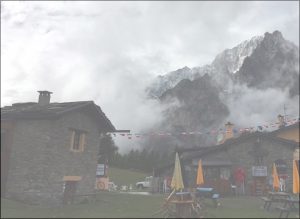
  • Walk of 7.32KM in 3.01 hours
  • Elevation gain of +1117m / elevation loss of -399 m
  • Min Elevation 1172M / Max Elevation 1962M

Day 7 Refugio Maison Vieille to Refugio Elisabetta

It was a very cold night; however we were warm and cozy in our nice little dorm. The breakfast was quite plain but overall it was a fine place to stay. The ground was frozen solid when we left at 8:00 and in fact it stayed that way until noon. This was actually a blessing as it definitely made the trail easier to walk. The sun was shining and the views got more spectacular with each meter of height gained and around every corner we came to. The Grande Col de Ferret and the ridge walk offered one of the most spectacular visual experiences of our walk. It was all above the tree line and circling the Mt Blanc range with its tributaries of glacier toes.

Elisabetta is another Italian Alpine Club Hut that sits just above WW 2 military ruins on the border between Italy and France. After another not strenuous elevation gain we enjoyed our experience at Elisabetta IAC Refugio with great food and good company. They served us a nice meal and we shared a four bunk room with a fellow from Serbia. Sunshine and fantastic scenery, no wind, and a great path – what a day! We felt sorry for the poor folks that we met yesterday who hiked this part of the TMB not being able to see 10 feet in front of them. We also heard that the authorities had to helicopter rescue a young guy who was suffering from hypothermia and that as of the morning of our arrival here he had not yet regained consciousness. We all seemed to feel chilled at the end of the day until we climbed under our duvets for the night. This is not a hike for the unprepared!
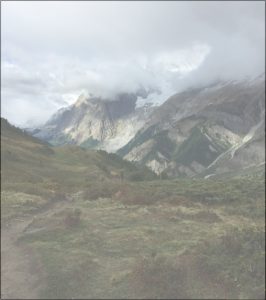
  • Walk of 13.04KM in 5.22 hours
  • Elevation gain of 2176m / elevation loss of -1934 m
  • Min Elevation 1935M / Max Elevation 2450M

Day 8 Refugio Elisabetta to Les Chapieux

Once again we were treated to a bright, clear, and cold morning. The trail was frozen right up to the summit and over the other side – once again a blessing as it would have been quite muddy for us had it not been frozen. We enjoyed a breather on the deck of a restored Italian custom house (museum now but closed for the season) and after the break completed a short up-hill section to the saddle with its stunning views of the valley and the glaciers below the Col de la Seigne. There was a very stiff breeze so we didn’t linger and we quickly popped down into France. The weather was deteriorating and offered us a mixed bag where we were constantly taking our wind jackets on and off – but it wasn’t raining or snowing! We enjoyed our traditional soup lunch at the Refuge Des Mottets (a repurposed dairy farm) where there was also a Memorial to an American B-17 and its crew that crashed on the glacier near the mountain top in WW 2 and began to emerge from the glacier in 1974.
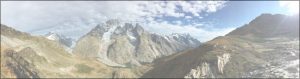
We then completed the very scenic downhill run to Les Chapieux and the Auberge de la Notra where we enjoyed a beer before we showered (one of the nicest showers on the trip). We shared our evening meal with 2 couples from England and thoroughly enjoyed the conversations. Our first French meal was soup, pork with pan fried potatoes, cheese and bread, and a berry mousse for dessert. We then retired to our own private room for the night.

  • Walk of 16.26KM in 7.36 hours
  • Elevation gain of +675m / elevation loss of -1297 m
  • Min Elevation 1534M / Max Elevation 2523M

Day 9 Les Chapieux to Contamines

This ended up being the longest day of our trek. From Les Chapieux it was an immediate climb up to Refuge Du Bonhomme, a high alpine chalet, and then over the Col des Fours. Our ascent had been long and steady and on a fairly nice and consistent trail, however when we hit the top and started down the other side we had to work our way through a huge rock field (navigating the toughest 50 meters of the trip along a narrow ledge that crossed a rock face and gurgling stream). This was then followed by about an hour of picking our way through a large boulder field before we hit the lower saddle and were blown around by a very strong (and cold) wind. We didn’t linger as the weather, which had been fine going up, turned, the clouds rolled in, and before the day ended it was raining hard. Once again we could only think of the folks who we passed who were heading up as we went down and contemplated what they had ahead of them, especially if the rain turned to snow (and that was not unlikely). We stopped at the Refuge Nant Borrant for our traditional lunchtime meal of hot soup and from then on we were walking in the rain. Our trip into Contamine was fairly easy but long. When we finally arrived in Contamine the Auberge where we had hoped to find shelter was shuttered for the season and the rest of the town was basically closed (Sunday afternoon at 5:00 PM). Terry, using Booking.com, found us a suite in a private home but it was another 1.5 KM and we couldn’t raise a cab. However, Google Maps led us to a walking path and once we found it, the place ended up being a very nice find.
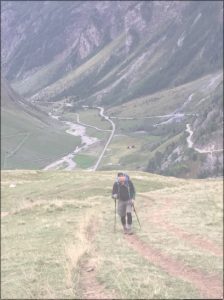
We unloaded our stuff and then returned to town for dinner but all of the restaurants looked closed. The local grocery store was open however and it provided us with a bag of salad, bread, pasta, and a piece of salmon. Terry whipped us up a wonderful concoction of salmon pasta delight (along with a better salad than we had in Ferret). The weather forecast for the next day was iffy and we once again were thankful that we were where we were and that we didn’t have to contemplate heading in the direction that we had just come, especially if the weather was bad.

In retrospect we decided that we probably should have called it a day at Refuge Nant Borrant. 20/20 hind sight!

  • Walk of 22.75KM in 9.06 hours
  • Elevation gain of +1558m / elevation loss of -1954 m
  • Min Elevation 1558M / Max Elevation 2494M

Day 10 Contamine to La Houches

We had our own homemade breakfast and were out the door at 7:30 for the walk back into Contamine where we arranged to get a bus to Les Houches. While waiting we popped into a local coffee bar for a latte and to soak up some local atmosphere as a steady flow of ‘regulars’ stopped in for their morning Jo. It felt quite quaint to be sitting amongst the locals and listening to their French chatter. From the local tourist info office we learned that all of the cable cars, the Alpine train, and most of the ski lifts stopped running yesterday (Sunday) for the season. This caused us to re-evaluate our final few days as we were relying upon these modes of transport to make our lives significantly easier on the hoof by lifting us up and over a number of significant elevation challenges. We took the bus into St Gervais and then hopped a train to Les Houches, which is the most common starting point for the counter clockwise approach to the TMB. Terry, using Booking.com, found us another great place 1.2km from the station. When we checked-in we discovered that our room also included a bus pass that enabled us to go into Chamonix. The weather was good but scheduled to change and we could actually see the cable car making the final approach to the top station on Mount Blanc so we hustled into Chamonix. We caught the 11:30 cable car to the top and for the next 90 minutes enjoyed spectacular changing views as the clouds rolled past and over Mont Blanc, its glaciers, and associated peaks. We managed to see all of the listed highlights from the Aiguille Du Midi Mt Blanc at 3842M. We then toured the photo exhibit of the construction of the lift and station followed by the museum of ascending and most recently descending Mont Blanc, the tallest peak in Europe. By the time we headed down at 2:00 the top of the mountain was totally socked in.

We then enjoyed some traditional French Onion soup in downtown Chamonix – a mixture of Banff/Whistler on steroids – the major difference being that the mountains are right there with the glaciers literally hanging over the city. We enjoyed a rubbernecking stroll through this pretty high-end tourist Mecca and later that evening walked to a very nice little Indian restaurant in Les Houches where we were the only tourists, and enjoyed a very nice meal.

Day 11            Les Houches

This was to be our last day on the trail, however as our cable cars and mountain train weren’t running, rather than a full day we opted to take the one remaining cable car (Bellevue) to the Col du Voza and then walk back down to town. Our window of opportunity weather wise was from 11 to 2 (and the weather forecasts for us have been just about right on). We began the day in another local café with a baguette and coffee and then we rode the cable car up to the pass. On the walk down we were treated to numerous “sucker holes” where we were offered quick glimpses of the high mountains above the city that occasionally poked through in the middle of the clouds. Really quite amazing and spectacular. We had a picnic lunch (the remainder of our foodstuffs from Contamine) in a road side park and then returned to Chamonix for dinner in a local haunt which we had spied the day before. French cuisine/menus are not as appealing as Italian – and are more expensive. However, we did enjoy the cheese plate of 3 local cheeses, crackers, and fig preserves for dessert. We just missed the last convenient bus back to Les Houches so shared a cab with another couple of hikers back up the valley.

  • Walk of 4.5KM in 2.25 hours
  • Elevation gain of 1086m / elevation loss of -1105 m
  • Min Elevation 968M / Max Elevation 1802M

Day 12 Les Houches to Geneva

We opted to take advantage of the wonderful – and expensive – buffet breakfast offered by the hotel (not in the room cost but probably the best breakfast option thus far) and then hopped the shuttle bus into the Geneva airport. We arrived into a sun bathed Geneva and with the assistance of Terry’s Google Map we found our hotel via a bus and street car. We dropped our bags at the Hotel Carmen (a definitely more than adequate 2 star with three beds in a large room which included a writing table and three chairs). We enjoyed a walk (again with the assistance of Google Maps) to the Museum of the Reformation with presentations on:

  • The Bible
  • 12 minute A-V presentation on the history of the Reformation
  • The wars of religion (St Barts Day Massacre)
  • Calvin and Geneva
  • Music Room
  • Huguenot dispersion
  • Good works train (institutions designed to assist the underprivileged – amazing the organizations mentioned!)
  • 20th Century – American story; Pentecostalism; Mega Church
  • 21st Century – Pentecostalism in Africa, Asia, Latin America and traditional Protestantism as an alternative
  • 2000 years under the St Peters Cathedral – amazing story and presentation of historical archeology located under the actual Cathedral!
  • Tour of St Peters – Calvin’s Protestant Cathedral (very plain, simple and austere)

We climbed to the top of the towers for views out over Geneva and the lake

Day 13 Geneva

We enjoyed a restful night in our more than adequate Hotel Carmen with a not bad 10E breakfast. We began our day at the Plaza of Nations and the Museum of the Red Cross/Red Crescent. It included a very high tech presentation of the organizations history and major programs:

  • Family links (prisoners and refugees)
  • Reducing Natural Risks
  • Defending Human Dignity

There were also sections exhibits on

  • Organizational soul searching over its failure re the Holocaust
  • And a special section on Aids in the developed world from the 70’s until today (however the bigger story in my book is Aids in Africa today).

All in all, one of the better high tech museum presentations for sure – right up there with the Smithsonian efforts.

For the afternoon we went sailing with Veronica and Harvey on a Beneteau 21. We had fantastic weather (but very light winds) and great views of the city centre and Mont Blanc in the distance. We also enjoyed seeing some Swiss competitive Cats ‘flying’ for brief periods (behind a boat as the winds were not even strong enough for those guys to be lifted out of the water).

After our great afternoon we enjoyed a wonderful farewell dinner of pumpkin soup, cheese fondue, fried potatoes and onions in ham (cordon blue style), hosted by Terry from his China funds. (Thanks Ter!) Once again we just about screwed up following directions – in this case meeting Veronica at the dock. It was amazing how good we were at making our present situation/location fit the directions/info in the book, and yet we were actually in the totally wrong place! (Again!!!!)

Day 14 Geneva

We had an early breakfast with Craig and then walked him to the street car. Later in the morning while on a street car going to the UN headquarters we saw Paul and Catherine Scambler walking along the street! I texted him and found out that he was going to be at the airport at about the same time as we were the next morning.

We joined the 90 minute tour of the UN Geneva offices – the old League of Nations site which now serves as the home of the UN’s humanitarian initiatives. Our tour guide (from Berlin) was excellent and he spoke 5.5 of the 6 official UN languages (English, French, Spanish, Russian, Mandarin, and Arabic). The tour is a nice history lesson and features quite spectacular art from the League of Nations era. Interesting Fact: The UN’s budget is less than that of the NYPD! The cafeteria also has the cheapest coffee in Geneva along with an excellent book store. Both Terry and I noted a number of interesting titles.

After an afternoon snooze we headed out to the burbs for dinner and a wonderful Mendelsohn concert. The meal was at an outdoor cafe just off the main drag and was very good and reasonably priced! The venue for the concert was a round Protestant Church built in 1748 that housed a huge pipe organ. This was the first time that we had ever actually ‘seen’ an organ being played in a concert. The organist was projected onto the wall above the heads of a 25 member chorus. We were actually able to see what ‘Pull out all the stops’ really means. It is actually a musical reference and when all the stops are pulled open it gives the instrument maximum sound. And could that baby hum!!! We were able to watch the organist play 3 keyboards and the foot petals along with an assistant turning pages and pushing/pulling stops. Just a tad up on the level that Grace Thompson used to handle the key board in the back at Altadore Baptist!

Day 15 Geneva and Onward!

Both Terry and I had early morning flights out of Geneva at about the same time. We had no difficulty making it to the airport early on the Saturday morning and I was able to touch base with Paul Scambler – who had been doing some lobbying on behalf of the Canadian/American couple and their children who were being held by a Taliban faction in Afghanistan. – for about 20 minutes before he flew home to Victoria and I continued on to Dublin – the old small world!!!

Interesting Note: The couple and their kids were released about a month later.

The Trip Stats:

Total hike: 112.68KM

Our walk also included:

Elevation gain: 8559M           Elevation loss: 9998M       (Mt Everest is 8848!!)

The elevation gains/losses were something about the walk that I don’t think we had factored into our minds, although our Guide Book had very clearly outlined a walking profile! And we definitely did learn to rely upon this benign looking little graph!

Trip completed without one slip/fall and over some pretty treacherous terrain with no significant blisters or health issues (aside from a pre-trip slip in the kitchen). Pretty darned impressive for three guys all over the age of 65!
Final days in China

Final days in China

I’ve had a great time here in Wuxi, learned lots, met new friends and hopefully helped a class of grad students enlarge their research perspective using design-based research.  I also did two presentations here at Jiangnan University for faculty and students. The first was on Publishing in International Academic Journals and the second on MOOC Possibilities.

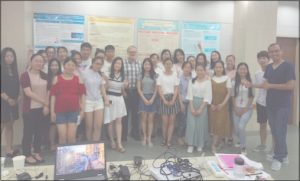
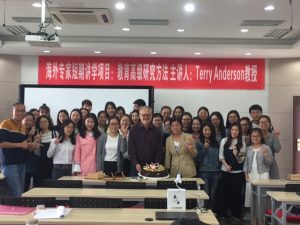
The Master’s degree class ended with the First China-Canada Student Poster conference. Each of 8 student groups created (in English) and presented (In Chinese) their proposals for a design based research project. Each project had to have a discussion of the context,

Final Day of Class with Poster Conference

a description of the intervention, the means of assessing learning, answering of research questions and a start at development of design principles from lessons learned.  I’m not sure if any of these projects will actually be enacted, but I think it was useful to explore research designs beyond the positivist paradigm that defines current research study here.  Of course, every good conference ends with a social and I ordered in pizza and pop for all.

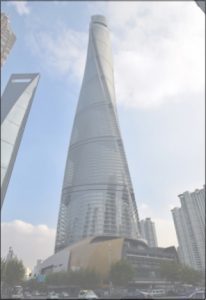
I also made time, with a few new friends, to visit Shanghai. We visited the Shanghai Tower which has recently opened and brags of being the second tallest building in the world.  As

Shanghai Tower

expected the view from the 125 floor observation deck was spectacular – but if only the smog didn’t obscure the vista!  I was impressed with the eco-friendliness, the elevators (40 MPH) and the design of the building. The whole building twists 120 degrees as it ascends, making for interesting lines and greatly reducing the wind forces on the tower. Given increasing number of global weather extremes this is important for such enormous structures.  The Tower also gathers and recycles all rainwater and has over 200 wind turbines in the top section of the tower to generate electricity.

We also visited a famous EdTech researcher (Prof Gu) at East China Normal University in Shanghai and talked about her editing of a new journal, distance education woes and the possibility of me making longer visits to that campus.

So what’s to learn?  My visit this time was in the more prosperous and populated parts of China, however, like Canada, there is a much more to see and learn about than visiting in large cities.  The people I met were really hard working, seemed relatively happy and clearly focussed on succeeding and building their own and China’s continued prosperity. Despite the pervasiveness of mobile media, traditional values like respecting elders and those with authority remain firmly entrenched. There seems to be lots of support for the current President and little open discontent with anything -including the air quality.  There is also great complacency with the way the “rules” for everything from travel, to media, to employment regulations seem to arbitrarily change and most I talked to are more concerned with knowing and following whatever the current rules are than in opposing them. Of course, perhaps western ideas of open discontent are sparse because they are clamped down on by authorities. Nonetheless, those waiting for the Chinese to rise up against their ‘undemocratic’ government will likely have a VERY long wait.

By using a VPN, I was able to use all of the Internet tools that I have access to in Canada – and I had more time on my own to get papers, presentations finished ans watch Netflix!   Reading in the  China Daily press (owned of course by the government) I learned that China is enacting new sets of Internet controls and supposedly engaged in public consultations.  The blocking of Google sites and most social media, has resulted in the growth of equivalent Chinese applications – some of which like cell phone payment systems are much more popular (and better?) than those used in Canada. However, China has a national goal to be A (or THE) world leader in technology development by 2050 and is investing appropriately. The recent exit of the US from global climate agreements provides even more incentive and opportunity for China to play a world leading role in this and other tech-enhanced ventures.  Unfortunately, I think the blocking of some educational sites (notably Google Scholar, but also Slideshare, YouTube and others) is counter-productive to China’s aspirations. I hope that “public consultation” (whatever that means) will result in more selective opening of certain sites and especially those with large educational and research value.

My wise older brother commented after my earlier post on my encounters with the Chinese medical system, that I had better be careful about too strong advocacy of pay for service medicine. My experience was minor and paid for easily by my Western income. What impressed me was the speed and efficiency of their system.  But I am also aware that for many, the fees that were ‘pocket change’ for me, are real obstacles for others. I didn’t see a single pan handler or beggar here in China, but I did see a display at a mall of pictures of a very young boy and his Aunt soliciting money  to pay for his cancer treatments. So, despite the challenges we have funding health services in Canada I remain convinced that full, public funding is the best alternative for everyone’s health and well-being.

So home tomorrow and I’ll be glad to see Sue, the ol’ neighbourhood and old friends. Thanks for reading. – comments welcomed.

A trip to Nanjing

A trip to Nanjing

Last weekend I accepted an invitation to visit and present a talk at the Jiangsu Open University in Nanjing. Nanjing is one of China’s larger cities strategically located on the Yangtze River. The Yangtze River delta was the centre of both economic power and political power for many hundreds of years and was the first capital of The Republic of China after the abdication of the last Emperor in 1912.

My host (and former PhD Student) Zhijun Wang (and her Mother and 16 month son) boarded

Zhijun Wang, Mother and son

the high speed train for the one hour trip from Wuxi. As most other travellers have noted the High speed train network in China is not only the largest, but arguably the smoothest and fastest train system in the world. We zoomed through the countryside at speeds (displayed on monitors in each car) of well over 300 KM/hour and of course we left within 1 minute of scheduled departure times.

My first “tourist” stop was to visit the Presidential palace complex where the Republic’s founding Father and  first President Sun Yat-Sen and his cabinet  lived and worked.  The tour, through mostly empty office buildings, was a bit sparse on useful stories and the crowds (Chinese are great tourists in their own country) and heat were both a bit oppressive. Nonetheless the compound had some nice gardens and ponds and one got a sense of the optimism and pride of a people first released from autocratic rule of successive dynasties of Emperors.  There was surprisingly little discussion of the civil war that shortened the life of this first republic nor the eventual triumph of the Chinese Communist Party led by Mao Tse Tung in 1949.

The next morning our host from Jiangsu took us to two adjoining museums focussed on wars ending with the Allied victory in World War Two.  The first Museum of the War of Chinese People’s Resistance Against Japanese Aggression  covered the global battle against fascism as expressed through aggression by Japan, Germany and Italy. The museum featured lots of photographs, equipment, maps and videos from the

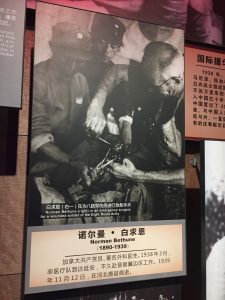
Picture of Norman Bethune at work in China

extended War with, as expected, major coverage of battles that took place on Chinese soil. I of course noted the few mentions of Canadian involvement and the picture and story of Canadian Norman Bethune (pronounced in Chinese as BA-Tu-N). Everyone I have talked to here remembers memorizing Mao’s poem eulogizing  Bethune that is still required study in primary classrooms throughout China. The picture below notes the official stance on China towards peace.

Peace Declaration Plaque

I am aware that China is becoming increasing proactive in global issues, not alike other countries as their wealth has increased, but China’s knows as well as any country the horrors of war and invasion.

The second Museum was dedicated to the infamous “Rape of Nanjing”  in 1937 when Japanese soldiers invaded the City and went on a 30 day spree of murder, rape and theft.

Horrors of Massacre of Nanjing

Estimates place the number of dead at 300,000. The museum was fittingly quite quiet and very sobering – despite the crowd.  Besides showing the effect of this assault on the people of Nanjing, the museum provided many photos, newspaper reports and stories of heroic sanctuary provided  by foreigners who stayed after the Japanese began their occupation. I was pleased to see that Ontario Legislature, just this month,  declared Dec 13 as the official date to honour those who suffered and died during the “Massacre of Nanjing”  the first (but sadly not the last) genocide of the 20th Century.

Finally another huge lunch and we drove to the Nanjing Museum. This is 2nd largest Museum in China and we certainly did not tour all the 70,000 sq metres of displays. I mostly wanted to see the history sections – right back to dinosaurs, early copper and bronze age archeology and to full-sized rooms of Nanjing in the early 20th Century. I left the rooms full of various dynasty pottery for another day.

Later that evening I was treated to a nice banquet by the Dean of the University (who sadly spoke no more English than I speak Chinese) but through Zhijun’s translation I found a bit more about this University. Like other Open Universities in China, Jiangsu is LARGE -over 200,000 students and 8,200 staff.  China’s 5 Open Universities (sadly like other Universities globally) are perceived by their campus colleagues as being inferior in terms of research and student quality (whatever that is). Entrance to China’s University system is perceived as being essential for financial success, yet only around 30% or so of students who write the dreaded 2 day Gougou entrance examinations in Grade 12 are offered a position at a campus University. Thus, the Open Universities, though still having (lower) entrance requirements, offer the only opportunity for postsecondary education for well over a million Chinese students. The main delivery model seems to be television (Jiangsu does 2 hours a day on public networks) and now increasing video delivered via Internet. Students also meet in classes with tutors once a week, but never attend a campus. Examinations are held in local learning Centers. I began to be more than just a bit concerned with the language gaps and knowing just what was expected of me in this visit and beyond.

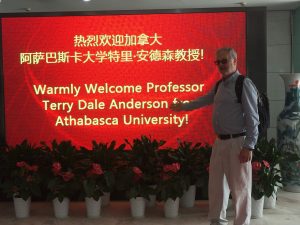
The next morning we arrived at the University to be greeted with a big welcome sign and

Welcoming Poster at Entrance of University

with much pomp I was welcomed to the Vice President’s conference room (The President was away). After a brief (translated) chat, I was given a tour of the multiple TV studios and massive computer room and then was presented with a Certificate (and major photo op) declaring me to be a Chair Professor of Jiangsu Open University.

I then did my presentation to a crowded room – mostly about Athabasca University and a variety of innovations in Distance Education that I had been involved with at Athabasca (topic chosen by them). I was introduced by the Vice President and heard later,that she had introduced me as the ‘Norman Bethune of Distance Education’!!  I  think that comparison is FAR overrated as Bethune’s trip to and work in China was a world of difference from my mostly luxury trip and minor contributions here. Fortunately, again Zhijung translated from my slides for the audience. I have no idea how many of the audience could understand my English.

Of course, the lecture was video taped and transmitted to a number of their learning Centres.  As normal in China, the ending prompt for questions for comments didn’t result in too much discussion, but a few interesting question. One was from a remote site and maybe mirroring some of my own concerns with video delivery, I couldn’t understand the question! Oh well.

Next, the Vice President and I were chauffeured across the street to another banquet. Finally, we talked about what they wanted from me – which turned to be “as many visits as I could manage” and some lectures.  I think what they want most is association with a ‘big name’ in western distance education.  They also noted they would be happy to discuss with me my requirements for expenses and “lecture fees”. Although everyone was very polite and generous with their time and compliments,  I was reluctant to commit to more than I was prepared to deliver (did I mention the air quality in Nanjing – think BAD!). However, I did promise to return early next spring (hopefully with Susan). I know well how long winter can be in Edmonton.

After a send-off (with the customary envelope full of 100 RMB bills) it was back to the train station and home of Wuxi.

An encounter with the Chinese health system

You can tell when a blogger is getting old by the percentage of their posts relating to health issues- and especially their own. This is one of that genre.

About three months ago a painful bump appeared on my heel, and after a couple of weeks of denying its existence, Susan talked me into going to see my family Doc.  He didn’t give me a name but said it was fairly common, suggested some stretching exercises  and booked me with a specialist. Rather miraculously (in Canada) I was able to see the specialist a week later.  The specialist told me it was a case of Achilles Bursitis, and booked for x-rays and an ultrasound. Of course I rushed off for an appointment with Dr. Google and found that indeed I (and you) have a number of cushion pads called bursae that shield the moving tendons from the bones of our joints. When they get inflamed you call it bursitis.  The specialist prescribed some anti-inflammatory cream and I got used to (almost) a dull pain as we trotted around Italy last month.

So landing in China for a month, I thought, why not see what Chinese medicine can do for me.  My first stop was at the hospital conveniently located on the University Campus. A 5 minute wait and a short examination and I had another tube of anti-inflationary cream. (Total cost about $7.00 for the cream and I some small payment via my new Jiangnan University staff card).  I learned from Chinese colleagues that the University hospital used western medicine, so they helped me get an appointment at the major Chinese medicine hospital in the centre of Wuzi.

So this morning we headed downtown for an 8:oo AM appointment. Unfortunately, my colleague had mistakenly made the appointment for the following day, so we decided to just see if we could ‘walk in”. This entailed showing my passport and lining up for 5 minutes to pay a cashier $12 to see the doctor.  2o minutes later we were standing at the open door as the doctor finished a session with an earlier patient (the Chinese don’t bother about patent/Dr privacy the way we do in Canada).  He quickly examined my heel and (through Zhijun’s interpretation) asked about my “western diagnosis” and the Internet gave us a Chinese translation of the afore mentioned malady.

He wanted to see an x-ray, so back we went to the line up at the cashier (waited about 15 minutes) paid $22 and we were on our way to radiology department. Another 10 minute wait and I was on the x-ray table. The equipment and safety of operator looked pretty much the same as my recent experience in Canada – with a much shorter wait time. Then it was back to the doctor (another 10 minute wait) and he was examining the x-ray on his computer. As expected the bones were fine, just the inflamed bursai.

He then punched in 3 prescriptions on his computer, printed them out and we were back in the cashier line (another 10 minute wait). I paid another $12 and went to the dispensary, waited 5 minutes and was given a bag with my prescriptions – a tube of herbal anti-inflammatory cream (made at the hospital), 8 packets of herbs (also made up at the hospital) with which I was to make a tea and soak my foot 3 times a day and a 24 tablets of an internal anti-inflammatory.  I may not take the internal pills as I was able to get a second opinion from Dr Google – who noted the drug  is associated with stomach problems.  The final stop was back to the radiology department to pick up the 11″ by 14″ x-ray.  I think it will be a nice souvenir and I’ve never known anyone else who has their own foot xray!

So, I still have bursitis, but as I write my foot is having a bath and the room smells like a wet autumn woods. The hospital experience cost me about $46 and two hours of my time – without an appointment.  It was, all in all, an interesting experience and I was impressed with the service and brusk but efficient operations of the staff.  However, I am certain that  this would have been an entirely different experience, without the translation services from my good friend and ex-PhD student Zhijung.

Only time (and perhaps a later blog post) will tell if the treatments work.

Classical Chinese Dance and Music Concert

Did I ever tell you about the time I starred in a Classical Chinese Dance and Music presentation?

Last night my host here at Jiangnan University invited to go with her to the annual performance of the students in the classical fine arts program here at the University. We got great seats in the campus performance center, which is a fairly large concert hall seating perhaps 1500 people and it was about ¾ full. The set was of the stone arch bridge and simulated streams that characterize this campus.

The program consisted of a mixture of dance and classical songs each based upon well known Chinese poems. Of course I didn’t understand the language but  Zhijun was able to find English translations of some of the poems. So I got to appreciate the often melancholy but also occasionally joyful emotions, movement and sounds created by the dancers and musicians.

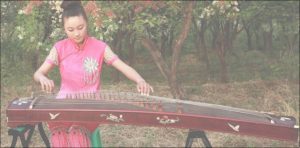
Traditional Chinese Guzheng

I was especially interested in two of the traditional instruments. One, the guzheng was not unlike the hammer dulcimer that I’ve been building and playing the last few years. It had about 20 strings but rather than  being struck with hammers, it was plucked. supposedly “Guzheng’s sound touches the Heavens above and the Gods and spirits below.”

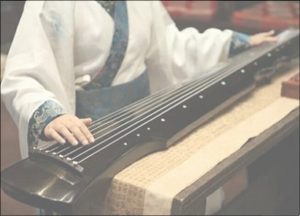
Guqin, China’s oldest instrument.

The second instrument is called a Guqin, not unlike a zither. It too was played horizontally, and plucked or stroked by the musician. It however had a fret board so each of the seven strings could be shortened by the musician to create higher notes and eerie slides. According to TopChinaTravel  “Chinese ancient scholars have to acknowledge four art, including play the Guqin, play Chinese chess, write good calligraphy and draw painting”

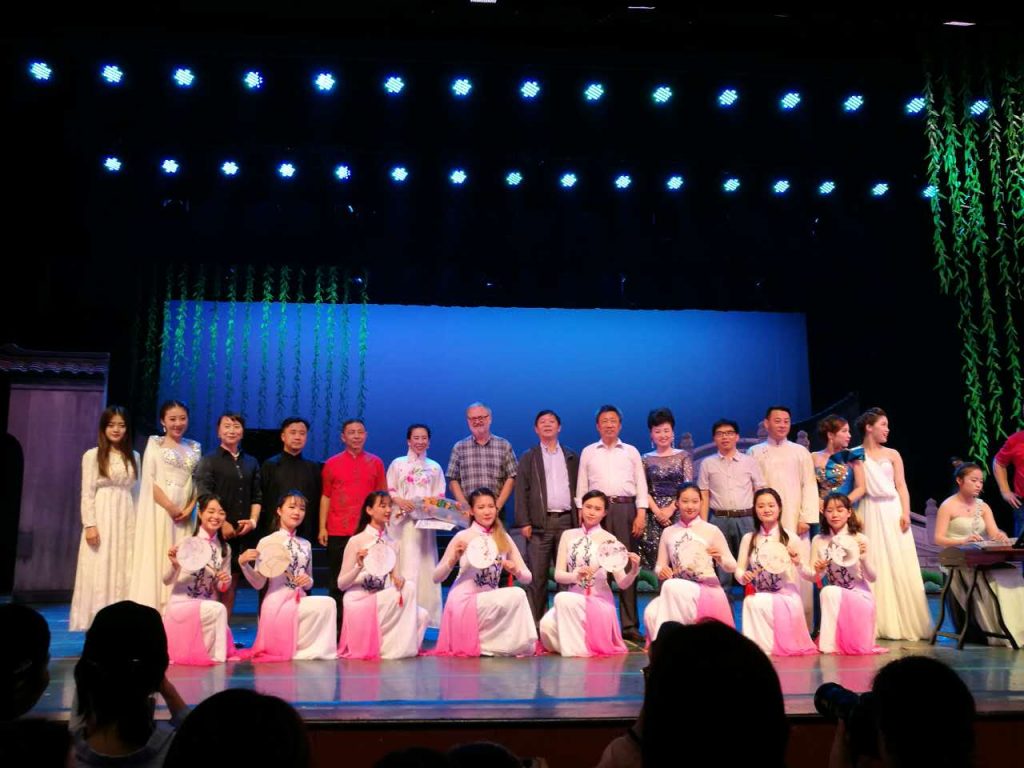
A bit surprisingly at the end the audience very briefly clapped and then proceeded to exit the auditorium. Meanwhile the cast was still all on stage, the director accepting a bouquet of flowers and everyone doing a final bow – to the quickly emptying auditorium. My colleague Zhijun asked if I wanted to go up and take a picture of the musical instruments. I thought that was a good idea, so we proceeded up near the front waiting for the photos to be completed and cast to disburse. However, soon the director noticed me standing there and came down and insisted that I come up and get my picture taken with the cast. And not only that, but I was dragged up beside her, right in the center of the cast. Then the official photographer arrived and seemed to take forever  snapping pictures and me looking and feeling pretty goofy as if I was really desperate to get my picture taken.

Crashing the photos take at Jiangnan concert

Likely you won’t have to guess “Where’s Elmo” to see me in the picture. After the photos were finally done, I was able to take my picture of the instruments  and get off that huge stage.

As I look at this photo I realize I don’t exactly blend in with the crowd. Last Sunday I was visiting one of the ‘ancient villages” near Wuzi, and a little 4 year old boy came up and asked my colleague if I was a “real foreigner”. This prompted me to think well maybe I am starting to look just a little bit Chinese, but tonight’s photo proves that I’ve a long way to go.

Teaching at Jiangnan University, Wuxi China

My 4 week trip to China is a week done, and I thought I would document the trip to date (you know us old guys have trouble remembering the details!).

Four years I received a request to host and sponsor a PhD student from Bejing Normal School. Zhijun Wang soon worked her way into our hearts and proved to be a very helpful and capable student.  After her thesis on connectivism and her graduation, and a new baby, she accepted a faculty job at Jiangnan University. A year later she invited me to teach her Masters degree students for a month in the Department of Educational Technology, where she has just recently been appointed a very young department chair. The course I am teaching is called Advanced Research Methods – but it isn’t that advanced (which is fine, as neither am I!). We are focussing on the hot methodology of ‘design-based research’.

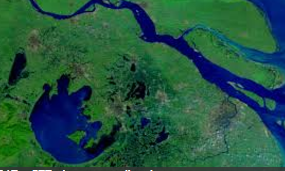
Satellite shot of Lake Tau with Yangtze river at top, Shanghai at mouth of the river

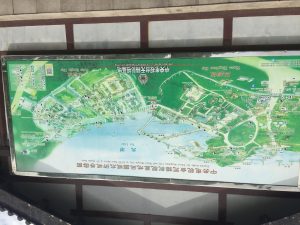
Wuzi is located about 70 km west of Shanghai and is one of those Chinese cities of 6.2 million people that almost nobody I know had ever heard off.  This is (I think) my 6th trip to China and I have to say that Wuzi is by far the prettiest large city that I have visited. The City is located on the ancient Grand Canal on the edge of Tai Lake one of the largest lakes in China. The relatively new University campus is on the lakeshore on the Western outskirts of the City.  The campus (like the old City Centre is bisected by a number of  canals and small rivers – complete with lily pads, fish and the the odd scenic bridge. The day I arrived the air was pretty thick (not nearly as bad as the Beijing soup, but a bit disconcerting).  However a rain fall the second day cleared away the smog and has been clear skies the rest of this week.

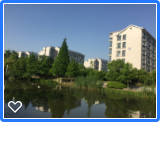
Student residences on the jiangnan campus

I’ve been accommodated in “foreign teacher” apartments that are quite spacious, one bedroom suites. The other teachers here are from all over the place, with maybe the largest component from Australia. Today I enjoyed a United Nations type talk over beers in our courtyard – and yes the Trumper was talked about.

I’ve been met for breakfast and most lunches by grad students who want to practice their English and it is really a treat to get to talk and ask questions about the ‘real China’.  On Thursday four students took me to Three Kingdoms theme park.

You’ve probably noticed how much Chinese people enjoy watching ancient warriors (with or without supernatural powers) battle each other and win princesses. Well, many of those movies were shot on the 86 acre or site built for that purpose and when not actively making films – the tourists descend. However Wuzi is quite far off the international tourist circuit and I think I was the only ‘big nose’ foreign tourist at the park that day. We toured the palaces (all built of stone) on the model of the Forbidden City in Bejing, the parks, castles and docks. We also watched a pitched battle between sword and various other weapon-carrying soldiers galloping around on horses. The speed and acrobats of the horseman was impressive, but the rides for visitors after the performance were pathetic by Calgary cowboy standards – the saddles all had big steel handles to hold onto while an employee took the reins and led the riders (walking) around the arena.

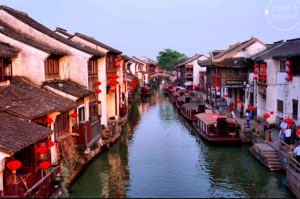
Last night Zhijung and a colleague took for dinner in the “ancient canal zone” which was very impressive. Lots of restaurants and bars and people out for a Friday evening stroll.

Ancient canals of Wuxi

We also saw a group of 20 or so amateur musicians playing  traditional Chinese  instruments and singing opera ballads.  We ended the evening with a 45 minute boat ride through the central part of town and saw the usual spectacular high rise buildings (most lit up) and a new Mosque and a very old Buddhist temple – which still has monks.

My course is going well and they ended class on Friday by bringing in a birthday cake for me and singing (with not quite right tune, nor words)


I finally got it together to buy a Virtual Private Network (VPN) that allows me to use the Internet and makes the sites visited think I am located in a selection of cities around the world- one of which I choose. This allowed me

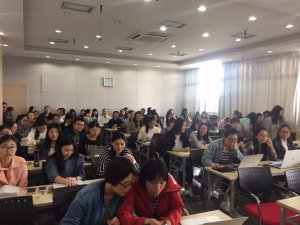
First day of Class

to watch a couple of NHL games streamed on CBC (which CBC restricts to Canadian sites). Fortunately the Oilers lost on Thursday, so I do not need to be too compulsive about watching the remainder of the playoffs. More importantly, the VPN allows me to access the numerous sites that are blocked in China – including Google, Google Scholar, Facebook, Twitter YouTube, Netflicks and many more. It is interesting to see the extensive use of WeChat and I am told many other equivalent net applications that are Chinese – no Google and Facebook domination here!

I  have been delivering my classes in English(of course), but I cut and paste Google translation of the text into Chinese characters beside, the English text. And having Zhijung as a ready translator really helps as well.

This morning one of the Faculty took me to visit historic town of Dankou. Near the entrance a little boy asked my Chinese Colleague if I was a ‘real foreigner’ – I guess I must be looking more Chinese now, if he couldn’t tell.  The town was nice to walk through – no cars and lots of boats on the canal. I also saw a man returning from fishing with 4 cormorants in the boat. Each of the birds went fishing with string on their leg and a ring around their neck so as not to swallow the catch.

Next weekend, we are off to China’s old capital of Nanjing for a couple of nights as a tourist and then visiting and giving a talk at Jiangsu Open University. All for now

Our trip to Italy – April 2017

Our trip to Italy – April 2017

Note: What follows is a 6 page account of the 24 days that Susan and I spent as tourists in Italy in April 2017. Hopefully it can be used by ourselves to recall those names and dates we too easily forget and for others to help plan similar vacations.

Introduction: Despite the numerous personal and business trips that we have made to Europe in the last 25 years, the only major country we have never visited was Italy. Thus, I sort of saved it for a retirement holiday and it did not disappoint!.

We decided to travel in April for two reasons – it is often a terrible month in Edmonton mostly because the expectations (for spring) and the reality (of winter) often do not align. This was borne out this year when we heard of (not sadly) two separate snowfalls of over 20 cm while we were away. We had also heard of the very hot weather and HUGE crowds in Italy during the summer. We were still quite shocked at the number of tourists and we were glad we brought sweaters and jackets, but we concluded that April is a very good month to visit Italy.

We planned the trip to visit the major tourist sights in North and Central Italy – mostly for the art, culture, and scenery. We also wanted to visit Genoa, where I had been invited to do a presentation at the National Institute for Educational Technology. Finally we wanted to try to use AirB&Bs and from previous travels, we knew that one had to book very early to insure good selection and prices. Thus, our itinerary was more or less set, when we booked four AirB&B sites in September 2016.

Venice: We decided to visit Venice first and booked our flight booked with Air Canada and they only fly nonstop from Canada to Rome, when we arrived in Rome. We took a pre-booked (cheaper than getting last-minute) a high-speed train ticket which departed 2 hours after our landing. Although we were a bit concerned with timing, we made the train from the airport directly to Venice. The scenery was great but after an all night flight, Sue mostly slept – my new policy of popping half a sleeping pill on the plane worked wonderfully and so had no problem enjoying the view as we sped along – up to 300 KPH.

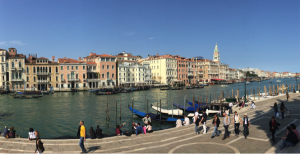
Walking out from the main train station onto the Grand Canal is a wonderful experience for all first time visitors.

We bought SIM cards for our IPhones (25Euros which gave us telephone and 4 gigs data (but no text) Sue’s worked fine but mine would not activate – problem with Apple Canada?? This data phones proved extremely valuable for Google maps and for phoning our hosts in the AirB&B – and of course for answering disputes and queries with a brief consult with Mr Google.

We bought a 2 day pass on Vaporetta boat buses (a bit expensive at 30 Euros each) but a great way to explore Venice. After the 2 days we found we could (and did) walk everywhere. Venice is like no other city we have visited because of the lack of cars and roads. Everything from garbage, to ambulances, delivery vehicles to fire engines is a boat! Thus creating a unique and very quiet environment. The Grand Canal is packed with water taxis and tourist gondolas but also with all types of commercial boats. In addition a huge cruise ship briefly blocked the view one night from St Mark’s square.

We did the usual top tourist sights, museums and churches including visits to LIDO and one of the other small islands. We also booked one walking tour with only 6 of us and a charming young Art student as guide. Our AirB&B Campo St Marco was great, full kitchen, a large eating area, bedroom and living room (which we hardly used). The large windows opening onto St Thomas Square afforded us a bird’s eye view of a bit of Venetian life. We also experienced for the first (but certainly not last time) great Italian pasta, fish and pizza. After 4 nights we took the train for a one day visit to Milan.

Milan: We left early for the 2 hour trip to Milan. We found our hotel near the train station and headed to the old town. We tried for a few minutes to buy tickets to visit the famous Douma (Cathedral) but the line up was atrocious, so we opted for a far too expensive hamburger and beer on a terrace overlooking the Doumo Square, and had a great view of a very excited champion soccer team getting photographed for over an hour. We paid the big bucks for an excellent guided walking tour which ended with 15 minutes in front of Da Vinci’s Last Supper in the Rectory of a Dominican Monastory the Basilica di Santa Maria delle Grazie. This was as our first walking tour with ear phones and it make a tremendous difference as the guide can chat away without halting to gather in the 18 tourists on this tour. He was excellent with lots of stories and time for questions. I hadn’t realized how badly the City had been damaged by British bombers during the 2nd world war. We visited the usual tourist haunts – Cathedral, opera house, Gallery, castle etc .and two hours later arrived for our 15 minutes with the last supper. Having the guide interpret the painting and its restoration (it was NOT done as Fresco on wet plaster so immediately began to fad and was re-painted by various authors and finally the Monks cut in a door which cut off Jesus feet!_. Twenty years of restoration in the late 1980-90 revealed some of the original Di Vinci paint and outlines. He also informed us that this very Monastery was the headquarters of the Italian Inquisition and that the fires burned nightly in Milan for many years – YUK!. But the expressions on the faces of the apostles, the effect of lighting in the refractory, the ‘miracle” that 2 sides of the room had been destroyed by bombs in WWII but left the painting intact, were each impressive.

Genoa: The next morning we headed for Genoa – normally a 2 hour (slower) train, which was over an hour late leaving the station in Milan. Thus, we missed a lunch for us put on by the National Ed Tech Centre folks. I did an updated presentation on Interaction modes in 3 generations of distance education pedagogy. There were about 30 people in attendance and one off-site location. They celebrated my visit and the tomorrow’s Easter break with a delicious and complex traditional Italian home made Easter cake and lemoncello – lemon liquor. The day ended with likely our best meal – with our host Francesca Pozzi and her husband Massi at a great sea-side restaurant owned by one of their friends. There was only one other couple at the restaurant and the owner had to show us pictures of the very fish we were eating and how he had caught it earlier that day. The next day they took us for our first-ever sail on a 38 Ft Bavaria sail boat in the Mediterranean. Not much wind but nice to see this largest harbor in Italy.

Our Genoa AirBnB was right downtown and turned out to be the most luxurious accommodation that we enjoyed on the trip. It was a large apartment with marble and hardwood everywhere , very modern kitchen and a great king sized bed!

We spent the following day exploring Genoa. I went to the Maritime museum while Susan got lost trying to go shopping and wound up in an interesting museum! The old town was great and quite amusing to see the faithful gathered around and praying at a full sized body of the dead Jesus on Easter Saturday – waiting for resurrection tomorrow I guess. Also heard a great guitar player outside the Cathedral, who told us he had played the Bach Cello suite just for us, as he saw us watching!

Cinque Terre: We had, from most visitors we knew, heard to Italy of the wonders of the 5 villages along the Italian Riviera that make up the CinqTerre. We had an Air B&B for 3 nights (2 days) at Manorola. It was Easter weekend and even without the cruise ships it was PACKED with mostly Italian tourists. Anyways we arrived at Manorla by train about 8:30 PM and had a bit of a time finding the AirBnB – thank goodness Manorola only has one road!!

We spent the first morning relaxing and enjoying the balcony view of the town and listening to the bells tolling for Easter morning in the Church next door. They even enticed Susan to attend Mass.  In the afternoon we headed down to wade through huge crowds at the Manorola Beach. We knew the sea trail to Riomaggiore was closed but our map showed the village was only about 3km away. What we didn’t know was that those 3 km were horizontal and didn’t count nearly an equal distance of vertical steps.  We really were not prepared for the roughness of the trail, the zillion steps and many loose rocks. But we made it!! We certainly were glad to end with Bruschetta and craft beer in Riomaggiore.  We took the 3 minute train ride back- the ticket machine was broken and the train packed so it didn’t matter much, and then hiked another km back up to our peaceful airB n B to relax and enjoy the view. We got a taste of why so many Italians are in such good physical condition
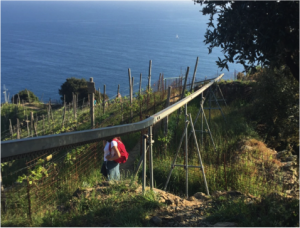
Our second and last full day in Manorola we decided to be smarter and took the local bus up 300 meters to a little town (nice church) on the ridge overlooking the sea. Then it was a still-challenging but easier walk down to the next village. The weather was nearly perfect – high of 19 degrees. There were quite a few people we passed in both directions, but it was interesting seeing the gradual rebuilding and planting of vines in the once abandoned terraces. We also looked carefully at the only mechanism used in these vineyards – the monorails that took the farmers up and grapes and olives down. We had a great lunch overlooking the sea at Corniglia and then headed along the trail to Vernazza. We enjoyed a beer overlooking the harbour and castle and then took the train home.
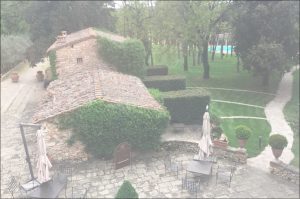
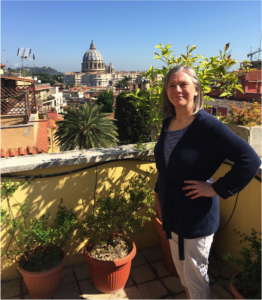
Florence and Tuscany: Next morning we were off to Florence and rented car so we could see some of Tuscony where we had our only one un-booked night of this trip. Two days earlier I went on Expedia and found a “members sale” for a “country hotel” for $66 Canadian near Sienna. We’ve had some less than positive experience at really cheap hotels before, so we crossed our fingers for this one. We had booked a rental car and fortunately bought our GPS with European maps. We had a wonderful drive through Tuscanny – absolutely the most stunning scenery we have seen thus far. We stopped at the mountain top town of San Gimignano. We enjoyed listening to a busker (and bought a CD) of a musician playing an new Swiss steel drum-like instrument called a Hang. The “country hotel” turned out to be a fabulous 200 year old 4 star hotel (see view from our bedroom window at Borgo San Luigi 

– a lot like Jasper Park lodge. They upgraded us (I guess they didn’t see how little we had paid) to a Junior Suite, that had a list price on the door of 350 Euros. We spent way too much on the hotel restaurant dinner but it turned out to be a wonderful night, and the breakfast the next morning turned out to be no charge.  We wish we had booked the place for another night or two. The following day we drove through Tuscany stopping at a couple of hill top towns including San Miniato and then visited the Leonardo de Vinci museum, in you guessed it – in Vinci!

Back to Florence and dropped off the car sans incident – thank goodness for GPS and found our Monastery – which seemed pretty Spartan after 4 stars last night!!

As others have noted Florence is an amazing City with a very rich Renaissance history. It is amazing that this landlocked town became the world centre for both Art and Banking – perhaps mostly due to the leadership of the Medici family leadership? Our stay at the Monastery was the worst accommodation of our trip. Susan had insisted on it based on one previous Monastery Stay and some latent fantasies of religious life. The room was (as expected very plain) but it was annoying to listen to the Italians arguing, or were they as Sue suggested just talking vivaciously next door late into the night and then again at 6:00 AM! We ‘ve noticed that besides extensive arm movements Italians tend to talk to each other very loudly. We also had trouble getting Internet, but Sue did do a couple of very early morning counseling sessions from the common room downstairs. Our two visiting days were spent at most of the big art galleries. We paid for “Skip the line” tickets for the Academia Gallery and were awed by the size and grace of Michelangelo’s David. The next day we visited the largest Art Gallery in Italy the Uffizi Palace and saw the sculptures and paintings accrued by generations of Medici rulers. We ended the day by enjoying the Sunset after a half hour climb up to Michelangelo Square overlooking the City.

Rome: For the final week of our visit we took the train from Florence to Rome. We had some trouble finding the AirB&B as we got mixed up between municipal trains and the Metro. I also had a very close brush with a pickpocket as during the rush and push to get into a very crowded Metro train I reached and noticed my wallet was missing. I swept my hand down and it was dangling, waiting to fall or be plucked at the waist line of my jacket – yikes – that would have put a damper on our holiday.

We did find the AirBnB and it lived up to its reputation and the reason we booked it, by a very large terrace (5th floor with elevator!) full of plants that overlooked St Paul’s Cathedral and the Vatican. It was a stunning view during the day and lit at night. We had 8 nights here and spent many a slow morning enjoying breakfast on this terrace.

We planned a more or less unplanned visit and spent the first day exploring our neighborhood and finding a delightful neighborhood restaurant with the owners with a huge smile, great food and not a word of English! The next afternoon we braced ourselves for the crowds and visited at Peter’s Square and Basilica. We were told it is the largest Church in Christendom – and it was impressive. We also wondered through the crypt to see all the dead popes and one lonely female – a deposed Princess who had sought refuge in the Vatican in 17th century.

The rest of the week we leisurely did the main tourists sites of Rome. All were crowded with tourists, but still retained the grandeur of past ages and great art. We did our one and only hop-on hop-off bus tour – never sure is they are worth the 30 Euros each, but did get a good overview. In turn we visited the Vatican Museum, numerous churches, Spanish steps, Trevi Fountain, the Forum and Coliseum – with lots of time for relaxing in our apartment. We also really liked the winding streets, ambience, buskers and restaurants of the Travestere area (on the right bank of the Tiber.) Also took in a Saturday morning combination baroque concert/tour in the Art museum Palazzo Doria Pamphilj (30 Euros) which was really excellent. To our surprise we saw the original painting from Dutch painter Brugel of skaters on a canal – we have had a larger print of that picture hanging in our house for nearly 20 years, and didn’t really know where the original was. As compulsory, we also toured the ruins of the Roman Forum and coliseum. Both worth the visit but hordes of other tourists and a bit of a tragedy that so much of these temples and the Coliseum was recycled by later popes and the wealthy into Churches and palaces. Ironically the only temples that did survive renaissance-age savaging were the ones that had already been converted to Churches. Visiting the 2,000 year old Pantheon temple was a definite highlight, and one of the most impressive spherical works of architecture we have ever seen.

Conclusion: I’ll end with a few lessons and hints:

  1. April is likely a good month to visit Italy as we had only one day of rain, but I did wear my sweater at least part of every day. Susan admitted that she brought too many warm weather items. I can’t image the hordes of tourists when it gets busy in the summer, as there were more than I liked in the Spring.
  2. Getting a sim card with data for google maps, downloading tickets, contacting AirB&B hosts and other conveniences – is a must. We likely could have gotten by without our GPS by using Google Maps, but it was nice to have a backup.
  3. AirB&B is a great way to travel. The price of accommodations are similar to hotels (see below). The size of accommodations, kitchens, appliances and balconies are MUCH better and 3 of our 4 AirBnB’s could have slept 4 people. But you are charged a cleaning fee and making contact with host is more challenging than walking into a hotel- so they are best for stays of 3 or more nights. With AirBnBs book VERY early to get best selection and prices. Our experience booking that 4 star country hotel in Tuscony through Expedia at $66 Cdn was a real bonus but hard to repeat!.
  4. Total Costs. We ate out at least once every day at medium priced restaurants average maybe 40 Euros/meal with wine, paid around $120/night for accommodations, usually used public transportation, but did grab a taxi when really needed or desired, and didn’t skimp on museums – but also didn’t do things like 80 Euros for a half hour Gondola ride in Venice. A nice way to enjoy these once of a lifetime experiences is to delude yourself that a Euro is equivalent to $1 Canadian even though in 2017 it costs $1.50 Can for a Euro!
Airfare $2373 (Can.) Average/day
Accommodation
     AirBnB $2373 $131
   Hotel $212 $106
   Monastery $315 $105
Concerts, restaurants, tours, museum, transportation, etc. $3074 $128
Total (2 persons) $8357 $348 – $249 minus airfare

These totals compare quite favourably with costs of 3 week cruise, but one shouldn’t underestimate the time and worry of booking everything oneself – and then resolving the challenges when you get lost or show up for a train at the wrong time or the wrong station!