A Rant on Underuse of Nuclear Power Generation

The real cost of solar and wind energy

December 2025

Let me begin this post by emphasizing that I am a BIG supporter of renewable energy – wind, solar and hydro. I think it is critically important for human and ecosystem survival to reduce (and certainly not increase) the amount of CO2 we dump into the atmosphere.

However, many fellow environmentalists underestimate the cost of solar and wind and refuse to look at viable zero carbon solutions due to ideological blinders.

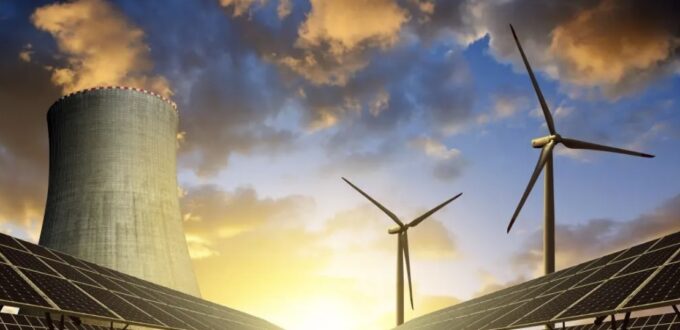
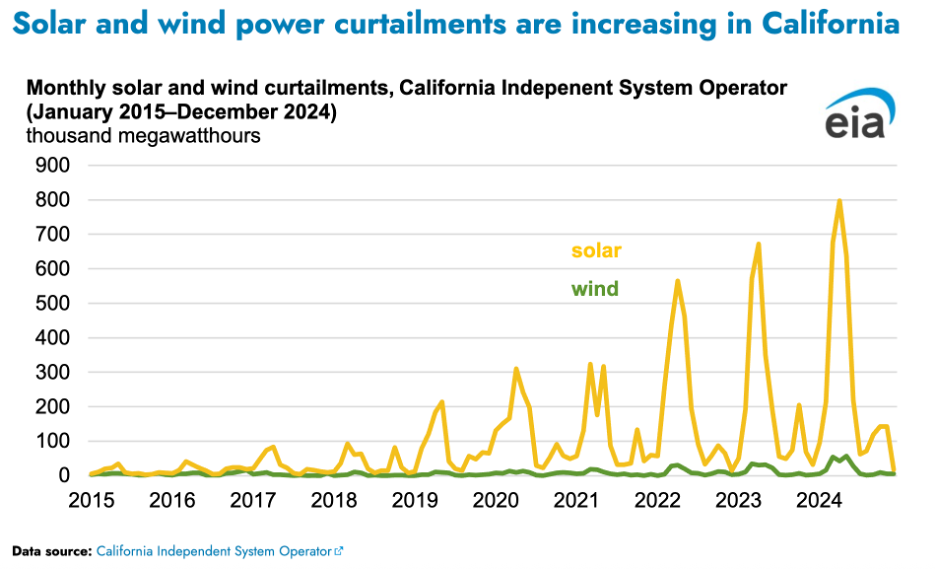
The headlines often proclaim that the cost of electricity per kilo watt hour (KWH) is now cheaper for solar than for almost any other means to produce grid quantities of energy. However, this initial low-cost installation masks real and increasing costs.  These costs are related to the familiar restraint that ‘sometimes the wind doesn’t blow and the sun doesn’t shine’. Other times the wind blows stronger, and the sun shines longer than our capacity to effectively put this energy to use. When this happens those managing the grid are forced  to shut down portions of the alternate energy production. In a sense wasting the energy and at best not producing the electricity that the technologies could be producing. This is referred to as ‘energy curtailment’ – when alternate energy production is intentionally reduced so as not to overload the grid.

Estimates of the global amount of curtailment vary and are increasing annually. Globally curtailments are estimated at about 3% (Novan & Wang, 2024) of total alternate energy production. However, there are huge regional and national variations and further, the amount of curtailment has been increasing as more energy from wind and especially solar comes on line. See figure 1
Thus reliable, 24 hour a day backup power must be built to match with large wind and solar generation. The use fossil-fuel producers to serve as backup is very expensive. No one wants to build a methane or coal fueled plant that only operates for a portion of the day. Almost all power coal, petroleum and nuclear power plants only become efficient when producing at near capacity levels, 24 hours a day.

So how do we integrate and even expand wind and solar energy without having to waste increasing amount of energy? An obvious answer is to increase the size (think national or contentment or intercontinental scale) grids such that wind or sun in one region can be matched with cloudy conditions, doldrums or nighttime in other areas. But this can be very expensive, and transportation of electricity is not without cost. A second option is to build very large batteries that can store this excess energy until it is needed. But we know from the costs (money and environmental) of creating batteries for electric cars and trucks that battery construction is not inexpensive and not without environmental cost. Further, the scale needed for grid batteries is much larger, than for vehicles. A third and viable solution in some regions is hydro storage. Pumping water uphill to storage lakes and then using the downflow to power generators when more power is needed.  Unfortunately, not every geography has large wind and solar capacity located close to hills or mountains where this water can be stored.

If one were to talk to the Alberta Premier or members of her government, the perfect solution is to burn more of Alberts’s ‘clean’ natural gas – which I prefer to call methane. These proponents seem to think that burning methane (or other petroleum products), coupled with the environmental cost and energy expenditures to bring these to market, though much cleaner than coal, is harmless. However, the major contributor to rising CO2 levels in Canada is oil and methane mining, production and distribution.

Is there an Alternative?

So where does that leave us? Maybe tidal power in very specific locations or the elephant in the room – nuclear power generation.

We all fear major blowout or explosions and release of harmful radiation from nuclear power plants. There has been three major and very well publicized nuclear accidents in 50 plus years of nuclear power generation. Chernobyl (1986) with 79 confirmed deaths, 3,000 est. from long term radiation deaths, Three Mile Island (1979) – 0 deaths; Fukishimo (2011) 1 confirmed, 2,300 deaths from stress and evacuation.  These numbers are tiny compared to the 120,000 deaths annually in the USA alone  (National Institute of Health, 2023) from air pollution caused by coal energy production. Yes, nuclear waste must be disposed of and uranium mines need to be cleaned up when they cease production, but again compared to coal or oil, these are minor challenges.

So why don’t we use nuclear technology more?  Ignoring the conspiracy theories (perhaps true) that big oil and petro states do NOT want to see the end of petroleum burning, There are more than a few challenges that must be overcome before widescale use.

The most frequently sited reason is that the construction of nuclear power stations is expensive and take a long time – or at least they used to. In North America, only 1 commercial nuclear plant has been commissioned in the 25 years of this century, thus the data we use to calculate costs and time required, is based on 20th century technology and construction techniques.  These two Plant Vogle reactors came online in 2023-24, years late and 3 times over budget for a cost of about $15,000 US per KWH. By comparison equally large South Korean and Chines reactors are coming online for between $1,800-$2,300 per KWH.  The Koreans have also built commercial scale reactors in less than 3 years. (data from ChatGPT)

The hype machine has, in the past few years, been championing the potential of new types of nuclear reactor SMRs (Small Modular Reactors).  These systems promise all sorts of potential benefit – factory manufacture using standardized components, recycling of spent fuel, passive safety systems that guarantee shut down in case of any environmental or man-made emergency and low-cost transportation by truck, rail or ship. These SMRs are also designed and sized for all sorts of commercial, mining, residential and military applications.

These “potential” reactors, especially those with radically different designs, from the pressurized water-cooled designs in use today,  have been criticized because so few (only one so far in China) have been constructed and are in operation today. Of course, USA, UK and Russia have been building small reactors for decades to power war ships and submarines. But commercial power production cannot rely on zillion dollar defense budgets.

Rather than innovate, governments and industry has focused for the past 4 decades on building safer (backups, for the backups, for the backups) older designs rather than innovating and building new reactors using new technologies.  This is changing.  But resistance is still strong.

Looking specifically at the Alberta context, where I live, we are home to the Alberta oil sands, third largest proven oil reserves in the world and the largest single producer of CO2 emissions in Canada. The high cost of extraction and processing, coupled with the added CO2 produced when the product is burned in homes and highways, means Alberta has a HUGE carbon footprint. Trial ballons for nuclear power in Northern Alberta have been raised twice but opposition from the petro industry, environmentalists and at best tepid support from government has, to date, stalled any real planning much less construction.

The Environmental Movement is Changing Course on Nuclear (slowly).

After shutting down all the nuclear plants in Germany, the government was forced to reactivate a number of coal mines due to the Russian oil and methane curtailment. The Germans as well as most EU countries are rethinking their energy production strategies. The Green party in Finland has adopted a pro-nuclear power policy but most other green parties in Europe remain opposed. Green Peace remains opposed as does the Canadian Coalition  for Nuclear Responsibility. However the Canadians for Nuclear Energy are strong nuclear power advocates and especially of the Canadian designed and built CANDU reactors.

Summary

Nuclear power isn’t perfect – no energy source is pollution free. However, some (wind, solar, hydro and nuclear) power generation systems do not directly produce C02 minimal other harmful emissions. Thus, if we are to continue building a society that enjoys (and is dependent) on power generation for  sustainability and convenience – we must continue to deploy carbon free production systems – including nuclear. Wind and solar need reliable backup.

References:

Novan, K., & Wang, Y. (2024). Estimates of the marginal curtailment rates for solar and wind generation. Journal of Environmental Economics and Management, 124, 102930. https://doi.org/10.1016/j.jeem.2024.102930

A Most Memorable Trip to Lisbon

Six weeks ago I received a very surprising email from Prof. Carla Padrel de Oliveira; the Rector of Universidade Aberta (Portugal Open University).  She invited Susan and me  to come to Lisbon where I was to be awarded a Doctorat Honoris Causa

Of course, the first thing I had to do was to ask Google what this degree was all about. I found it is the equivalent of the Honourary Doctorate awarded at most Canadian Universities.  In Google’s words ”The Doctorat honoris causa (D.hc) is an award conferred by a University to individuals who have made outstanding achievements in fields like academics, culture, or humanitarian efforts, or have made significant contributions to the state, nation, or world.”

Once I recovered from the shock I recalled my 4 or 5 visits, over the years, to Universidade Aberta and the colleagues and friends I have met as a member of an International Advisory Committee for LE@D – the University’s  Distance Education and eLearning Laboratory.  I also played a very minor roles in a couple of EU research projects led by the University.

To be honest, like many academics, I had held a very secret ambition or maybe just a faint hope, that I would someday be awarded such an honour. It is perhaps the nicest way to finish any academic career. However,  I never shared this aspiration with anyone and never stayed awake at night plotting to get such an award.  One does not fill out an application for such a degree. But when and if and when it happens – well, what can you say but “ muito obrigado.” (MANY thanks in Portugese)

This all happened a few weeks just before Susan and I left for a three-week holiday and conference of the World Conference of the International Council for Distance Education in New Zealand. This was a great holiday but five days after we arrived home, we were due to leave for Portugal. A first order of business was to get my suit dry cleaned, shoes polished and to develop a Graduate Research seminar for the Masters and Doctoral students in e-learning research at the University. I understood that I didn’t have to do much in the actual award ceremony. However, after I arrived, I found that a response to the award was expected – but no more than 25 minutes!  I am a professor, so I can usually profess about almost anything without too much trouble for less than 25 minutes. Beyond that, I didn’t know what to expect – but I thought I could at least tell a few stories and say a heart-felt thanks.

The Trip and Lisbon

The trip with Air Canada was thankfully unremarkable except that the passport machines at the airport in Lisbon refused to accept my passport.  The same thing happened on the way home, necessitating long lines to talk to a human Customs Agents. Perhaps  my passport is getting as tired of International travel as I am, though the passport gets to be reborn in 2027!

We arrived, on time, after eleven hours in the air, on a sunny Sunday morning in Lisbon.  I managed to prebook an Uber ride to the hotel, which turned out be remarkably easy and the driver was very friendly.  Sadly, I didn’t get the message that the University had a driver waiting to pick us up. I’m not used that type of service.

Casa de Sao Mamede

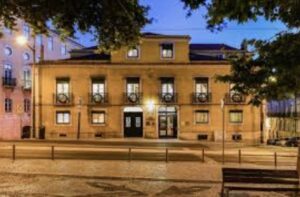
Our hotel was located in an 18th century mansion – the Casa de São Mamede on Rua da Escola Politécnica– not far from the University of Lisbon and next door to the Palace that houses the executive offices of Universidade Aberta.  Our room had 12 foot ceilings, 14 inch stone walls and a number of small ‘reading rooms”. The only thing missing was an elevator, but the staircase was broad and richly carpeted. We have stayed in too many ‘modern hotels’ – so this one was a real treat.

Lisbon Christmas market

After a brief nap, we headed to the old town and a visit of a European Christmas Market. Of course, we had some hot mulled wine and managed to NOT buy any more Christmas ornaments,  nor pay for a photo with Santa’s elves. We noticed and appreciated the 30 deg. C. increase in temperature from Edmonton – though Lisboners were complaining of the cold!

After unpacking, we realized that we had forgotten to pack my suit jacket, so the first item of business on Monday was to find a men’s clothing store and buy a new suit jacket. I have been trying to de-clutter my closet of sports coats (without a great deal of success) since I retired. Luckily, I managed to resist purchasing the 1,000 Euro jacket and escaped – down only 100 Euros. The closet now has a new sibling.

We ended the afternoon at the Lisbon Botanical Gardens.

Lisbon Botanical Gardens

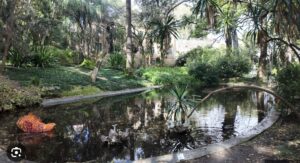
It was the most ‘well labeled” botanical garden that we had ever visited and featured Europe’s largest collection of palm trees – over 70 species ranging from 5 foot bushes to 25 meter giants. That night we dined with our major host and the director of the LE@D centre, António Teixeira and his wife Maria do Carmo at a traditional Portuguese restaurant. I’ve learned to like eating squid!


The Award Ceremony

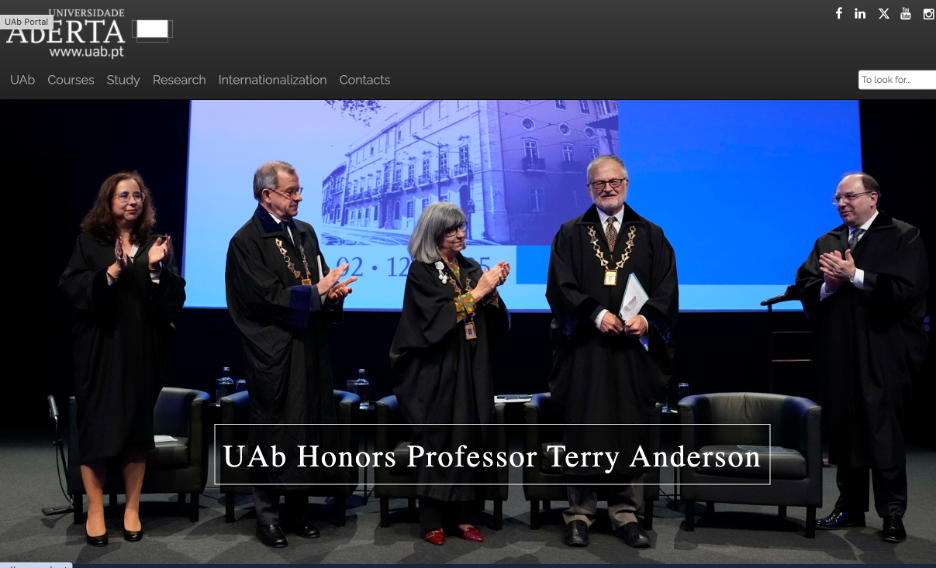
Tuesday was the big ceremony. We slept in and after a walk Susan helped me practice my speech. The Award Ceremony was held on Universidade Aberta Day- an annual celebration of the University’s founding – this year their 37th. As typically, the hundred or so gowned academics all lined up to proceed into the Hall – only here they file in not by faculty, but in order of rank at the University. The procession was led by the Rector and myself, followed by other members of the platform party. A great 8 piece choir welcomed us in.

Unlike most Canadian convocation award ceremonies, there were no students receiving graduation certificates. The Rector first gave a speech (thankfully with a paper English translation copy for me). This was followed with achievement awards to two Masters degree graduates and two PhD graduates and certificates were awarded to retiring staff members. Finally, the Portuguese Secretary of State for Higher Education brought greetings and congratulations to the University on its anniversary from the government.

The second half began with the singing of the University Anthem, in harmony, by the choir. My friend Antonio Teixeira then introduced me (in Portuguese), so I am not sure what he said, but no doubt it was somewhat over-exaggerated. Next, a faculty member from Porto, Isabel Huet e Silva, whom I had not met gave an equally long overview of my career and contributions to distance education and e-learning. She told me that she had spent a few hours going through my 35-page CV. When they had asked me for a copy of this CV, I didn’t think they really needed, or wanted, the “the full meal deal” – so I sent a two-page AI generated summary. But she wanted the whole thing.

Then it was my turn.

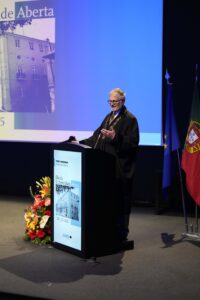
The Rector and her assistant “gowned me” and presented me with graduate certificate and a chain (representing the Doctor degree) to hang around my neck – then the  podium was mine.

 I confess to being a wee bit teary-eyed, but managed  to get though the speech. I was a bit overwhelmed with the long, standing ovation and clapping from the 200 or so attendees that concluded the event.  The ceremony ended with another choir selection and we marched out.
Luckily,  outside the hall, I was handed a glass of port and survived the reception line – with many congratulatory comments and photos.

Screenshot

The day ended with drinks and a dinner hosted by the Rector with a number of the Vice Rectors, the platform party, and of course Susan and I.

What a day!  I learned that the University had only awarded 8 of these degrees in its 35-year history. I joined Canadians Sir John Daniel and my friend Tony Bates with this honour, but I note that I am the first recipient of this award, from Universiade Aberta, who was not born in Europe.

Graduate Seminar

The next day, I gave a graduate student seminar. It was entitled “Encontro com o Professor Terry Anderson – Projecting the Futures of Research in Open, Distance and Digital Education.” Of course I talked too much, however, the 80 or so attendees  (70 via zoom, including a couple of long-time Portuguese friends from elsewhere in the world) seemed to enjoy the talk. It was based partially on slides I had created with help from my friend Rory McGreal and AI). The talk focused on the impact of Generative Artificial Intelligence (AI) on educational research production and publication. I have posted the slides on Slideshare. There were lots of good questions.

One of the problems with getting old and now talking about AI in education, is that many of these students have read my earlier articles and books. And now, they want to know what impact AI will have on those ideas.  Great questions, but ones I haven’t really thought about – I suppose (and hope) leaving them lots of papers to write!

Finally, Lina Morgado, a former Director of the LE@D centre who had first invited me to the University years ago, gave me a photo album, documenting my visits to the University over the years. – An invaluable memory gift!

Conclusion

On the way home, I was reminded of a  graffiti message that I had read 38 years ago when I was working on my Master’s degree at the University of Oregon. It was inscribed on the grout (with other grouty quotes), between the tiles in a stall in the men’s bathroom in a pub near the university. It read:

“Some men strive for groutness, others have it thrust upon them”.  

 I hope I will always remain humble enough to count myself in the later group.

PS.  The University invited a number of diplomats to this event (Lisbon is the capital of Portugal). The Canadian ambassador didn’t show, but Susan was seated beside the Turkish Ambassador. At the end of the ceremony he turned to her and said ‘I assume you are Terry’s wife?”  “We have a saying in my country: ‘Behind every strong man, there is a strong woman’. This is true in Canada as well as Turkey and I am a very lucky guy!


Subscribe to the Virtual Canuck

Hi Friend

I hope you are interested in subscribing to the Virtual Canuck. As you can see by browsing the site, I publish on a number of topics – Distance education, travel, personal stories etc. I usually publish less than once a month. I don’t sell or market anything. I just do this blog for fun and for my own record.

If you subscribe below, you will get an email each time something is published.

I don’t sell or share email addresses to anyone. I welcome your feedback and suggestions to improve the site.

Terry
____________________________________________